


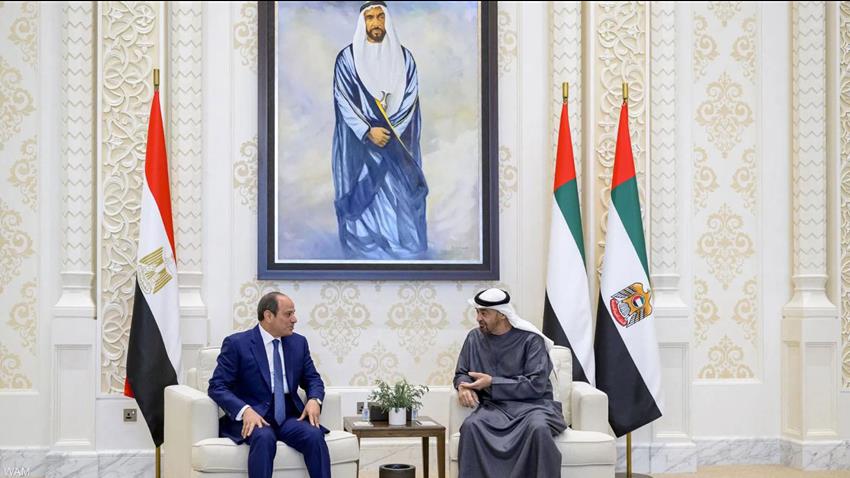
President Abdel Fattah El-Sisi paid short visits to the United Arab Emirates and Qatar on Thursday, in a fresh signal of Egypt’s support for Gulf states amid growing regional tensions and recent attacks targeting their territories.
According to the Egyptian presidency, the visits were aimed at reaffirming Egypt’s “unwavering solidarity” with Gulf Cooperation Council states and its rejection of what it described as “heinous and unjustified” assaults on their security and resources.
In both Abu Dhabi and Doha, El-Sisi stressed that the security of the Arab Gulf states is “an integral extension” of Egypt’s own national security.
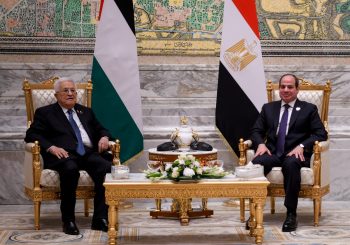
El-Sisi first travelled to the UAE, where he was received by President Sheikh Mohamed bin Zayed Al Nahyan. The two leaders held a closed bilateral meeting in which El-Sisi reiterated Egypt’s full backing for the Emirati leadership and condemned the recent Iranian attacks on the UAE and other Arab states. He also said Egypt had conveyed a clear message to Iran that Gulf states are not parties to the ongoing conflict and that attacks against them are unacceptable and must stop immediately.
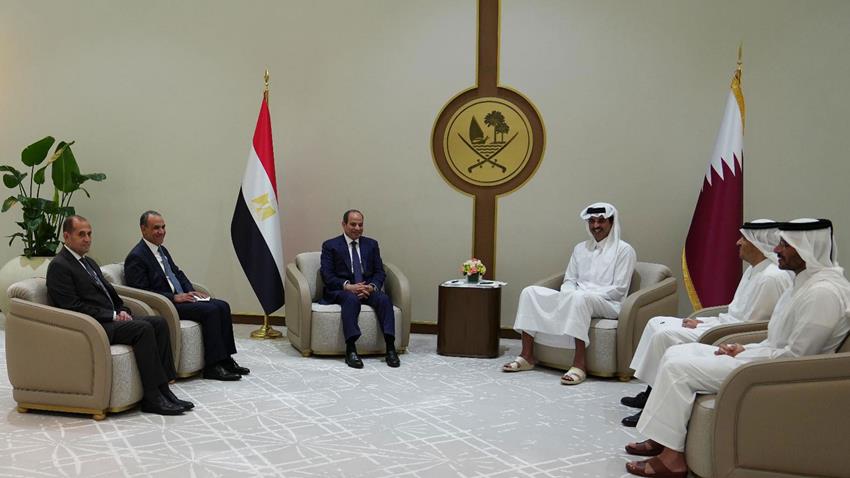
He then headed to Doha, where he was received by Qatar’s Emir Sheikh Tamim bin Hamad Al Thani. In talks with the Qatari leadership, El-Sisi repeated Egypt’s support for Qatar and other Gulf states, backing what he described as their right to defend their sovereignty and territorial integrity. The two sides also agreed to intensify consultations in the coming period to help de-escalate tensions and restore regional stability.
The back-to-back visits come as Egypt intensifies its diplomatic outreach across the Gulf. Over recent days, Cairo has combined high-level calls, ministerial visits, and direct messages to regional actors in what officials describe as a broader effort to contain escalation and reinforce collective Arab security. Foreign Minister Badr Abdelatty has already toured Gulf capitals under presidential directives, while El-Sisi also held calls with leaders in Saudi Arabia, Bahrain, Kuwait, and Iraq.
Egypt’s message has remained broadly consistent: reject attacks on Arab states, prevent the conflict from spreading, and push all parties back toward negotiations rather than military confrontation.
During both meetings in the UAE and Qatar, El-Sisi said Cairo continues to prioritise political and diplomatic solutions and has been in contact with Iran as part of de-escalation efforts.
Media Narrative
The visits also come against the backdrop of a tightening official narrative inside Egypt over how the regional crisis is discussed publicly.
Earlier this week, Egypt’s media authorities called on journalists, commentators, and social media users to avoid publishing content that could harm Egypt’s relations with Arab states, warning against rumours, accusations, and divisive rhetoric.
The statement said such material could damage “deep fraternal ties” between Egypt and Gulf countries and urged the public to rely on official sources for information.
The current conflict began on 28 February, when the United States and Israel launched coordinated strikes targeting Iran’s military, leadership, and nuclear-linked facilities.
Iran responded with waves of missile and drone attacks not only on Israel, but across the wider region, targeting U.S. military assets and key infrastructure in countries including the UAE, Qatar, Saudi Arabia, and Bahrain.
In recent days, the confrontation has intensified further, with strikes hitting critical energy facilities such as Iran’s South Pars gas field and Qatar’s Ras Laffan complex, raising fears of prolonged disruption to global energy supplies and a wider regional war.


Comments (0)