


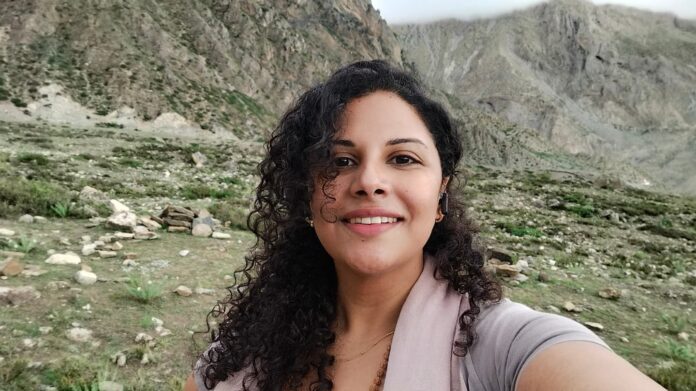
Alaa Saad, a journalist traveling alone this January, contacted the Safwa Utopia hotel in Port Said city, Egypt, to book a room for a night. The hotel turned her away because she is a single woman. No explanation was offered beyond the phrase “single women are not allowed.”
Saad tried calling the Ministry of Tourism and Antiquities hotline twice to report the incident to no avail. Eventually, filed an official complaint with the police.
She also took to social media to tell the story and received a lot of support. Her experience resonated with many, as it represented a persistent reality that millions of Egyptian women navigate every day. Their right to move freely through public space is conditional, subject to informal oversight, and dependent on the tolerance of strangers.
The incident has drawn a wave of solidarity from civil society groups such as the Egyptian Initiative for Personal Rights (EIPR) and Edraak Foundation for Development and Equality, as well as legal advocates, including activist and lawyer, Nehad Abo El Komsan and lawyer Heba Adel. Opposers argue that what happened to Saad was not an isolated act of prejudice by one hotel, but a symptom of entrenched social and cultural patterns that have long restricted women’s presence in Egyptian public life, patterns that the country’s own constitution and laws formally prohibit.
Egyptian constitutional protections are explicit.
Article 62 guarantees personal freedom, including freedom of movement, as an inviolable right. Article 53 bars discrimination based on sex, among other grounds. A 2022 law governing hotel and tourism establishments explicitly prohibits denying entry or accommodation to guests based on gender.
Yet, over the years, women continued to face the same prejudice in hotels. In an investigative report published in June 2021 by raseef22, four women, one of whom has filed a lawsuit, share their personal struggles of being turned away at hotels. The report shows that while the law remains clear, the phenomenon is a widespread informal practice.
Fighting for Saad is the New Woman Foundation (NWF), an Egyptian feminist non- governmental organization established in 1984, and her legal representation.
The Public Prosecution opened an investigation into the report on the basis of a violation of Article 161 of the Penal Code, which criminalizes sex-based discrimination when it denies equal opportunity. It took Saad’s statement, and later, a hearing date was set on 10 March.
On the day of the hearing, prosecutors in eastern Port Said cleared the manager of charges as the hotel’s ban on unaccompanied women amounted to an internal policy rather than a criminal act.
The NWF called that reasoning a legal shield for discrimination, one that undermines Article 161 of the Penal Code. On 7 April, the East Port Said prosecutor’s office filed an appeal calling for the acquittal to be suspended and a retrial of the manager. Another hearing has been set for 27 April before an appellate misdemeanor court.
The gap between the law and its enforcement, particularly for women traveling alone, working outside the home, remains vast, according to the Egyptian Centre for Women’s Rights (ECWR)
“The defense of Alaa Saad’s right to accommodation is not a defense of a hotel reservation,” reads a solidarity statement signed by dozens of activists and legal advocates. “It is a defense of women’s right to exist in public space without stigma, suspicion, or guardianship.”
The statement invokes Egypt’s obligations under the United Nations (UN) Convention on the Elimination of All Forms of Discrimination Against Women (CEDAW), which calls on signatory states to dismantle social and cultural norms that position women as subordinate, and to guarantee equal rights to freedom of movement and choice of residence.
The fact that Saad had to involve the police to be able to practice a basic right remains inexplicable to advocates and women alike.




Comments (0)