
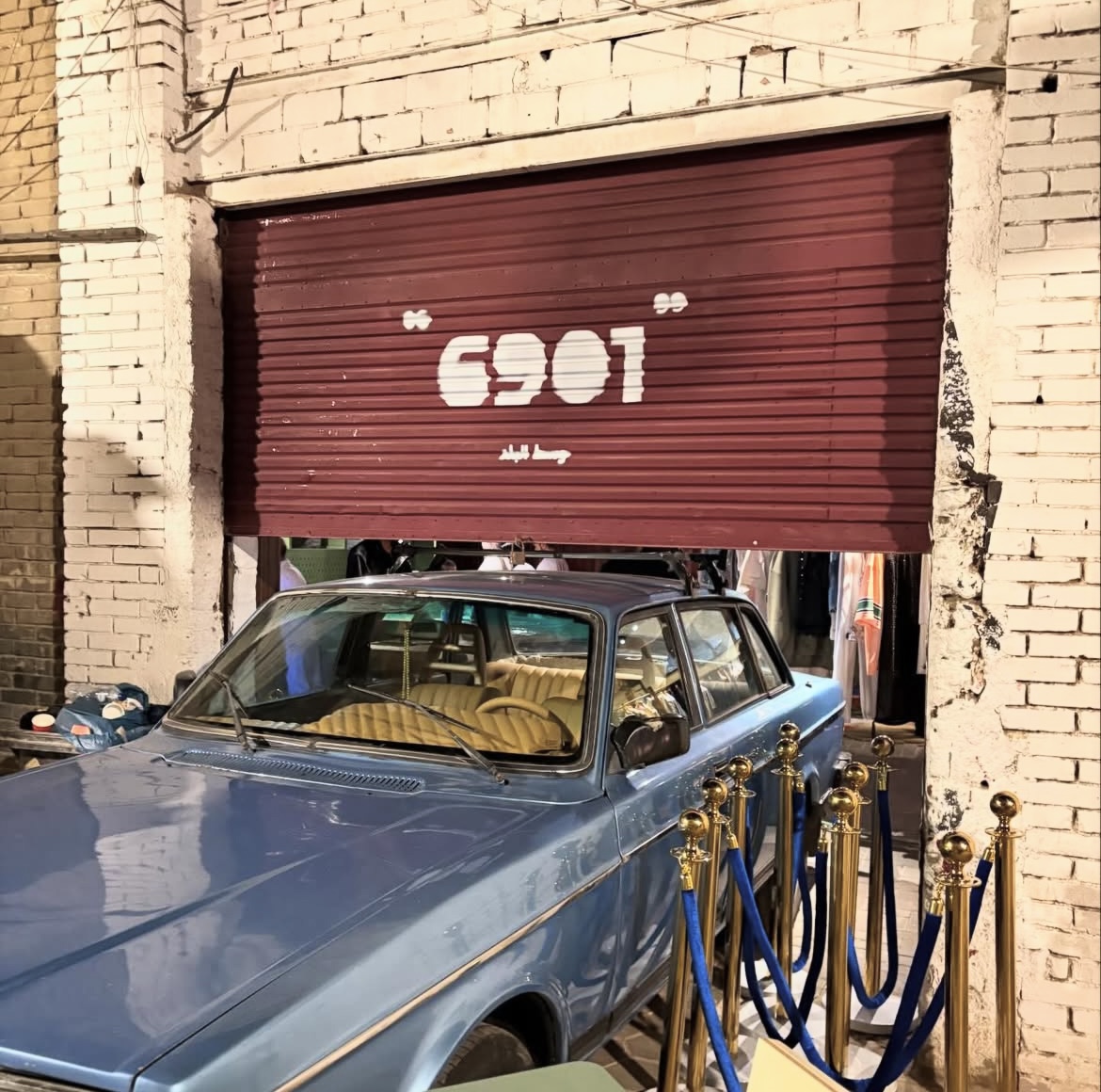
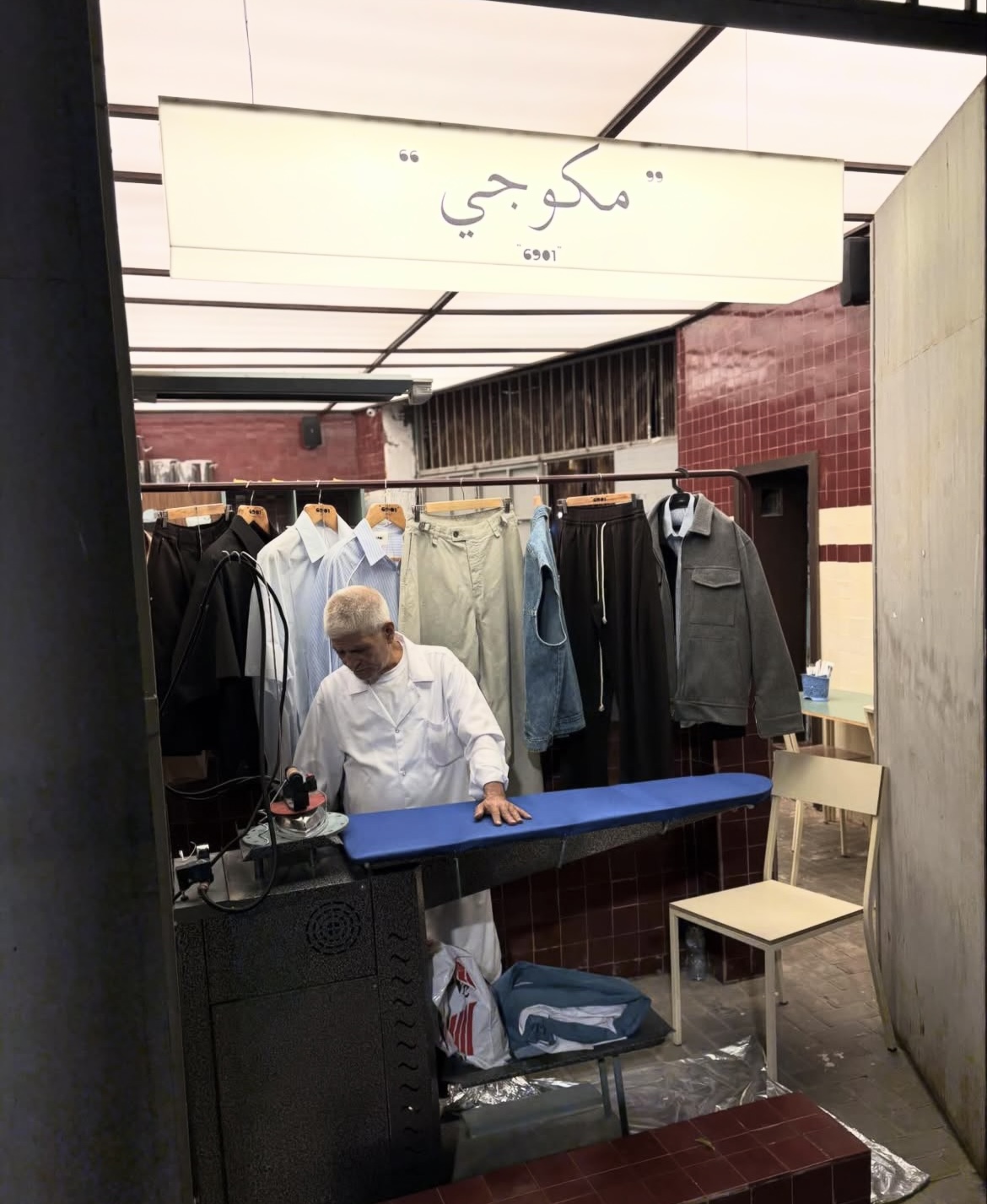
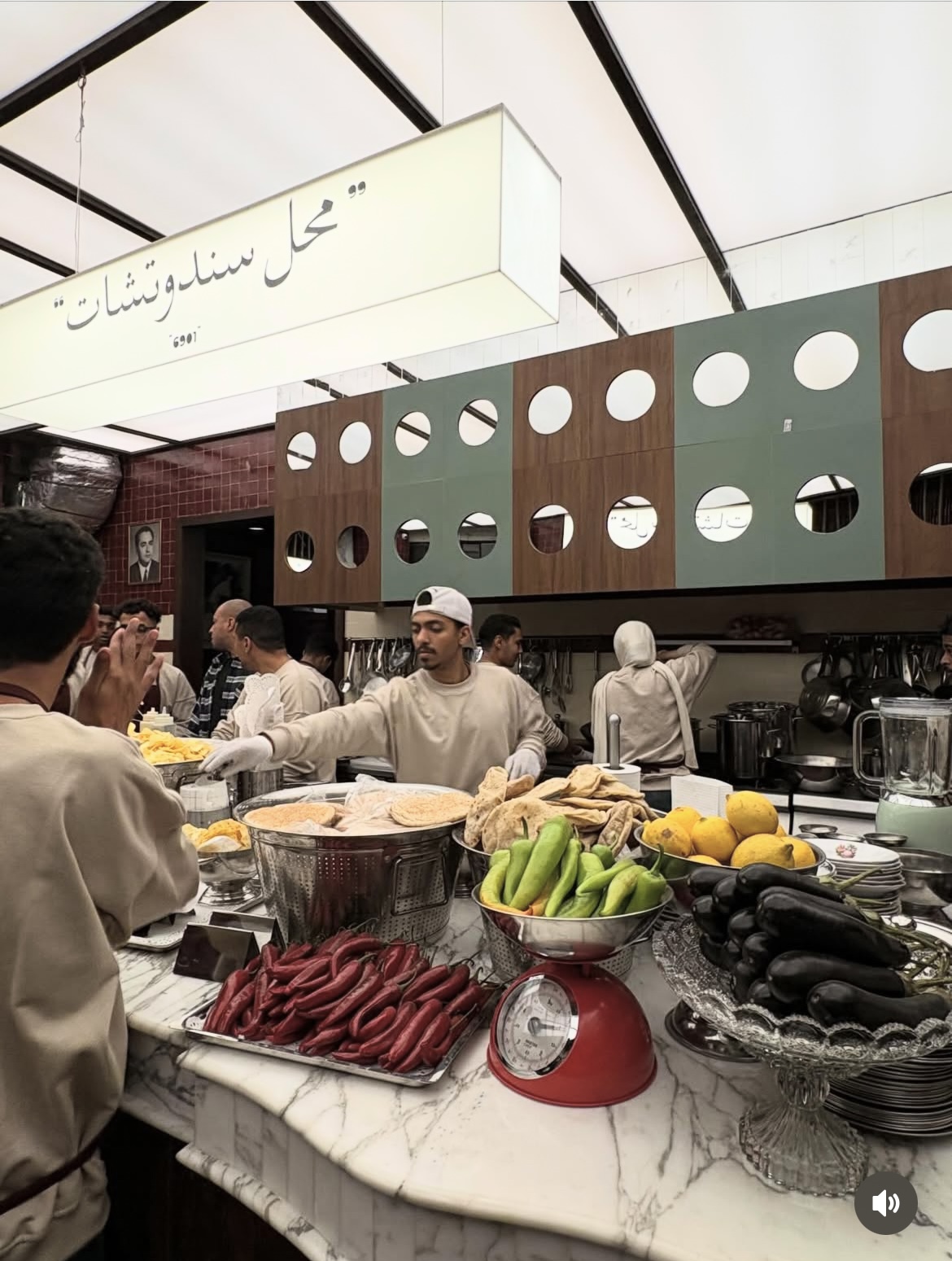
A new concept store, described as “funky” and “experimental,” has opened in Downtown Cairo. The store, 6901, was founded by the creative mind behind Maison 69. What started as a dark, unused room occupied only by a neighborhood makwagy (an ironer) has been transformed into a hybrid venue selling Egyptian food, vinyls, and curated men’s and women’s wear.
It draws from the visual noise, textures, and pace of Downtown, a neighborhood layered with history, informal labor, and cultural memory. Yet the online conversation exposes a tension that goes beyond a single store: the question of who gets to represent Cairo’s working-class life, and who gets to profit from it.
The fine line between cultural celebration and cultural extraction
In a country as socially layered as Egypt, representing “street culture” is never neutral.
According to the 2021 book ‘Aesthetics of Gentrification’, published by Amsterdam University Press, creative projects that borrow working-class or marginalized urban aesthetics often end up transforming them into polished, consumable experiences for wealthier audiences.
The book describes how design and cultural branding can create “seductive spaces”, environments that appear authentic but remain socially exclusive, where the look of urban struggle is celebrated while the people who live it are sidelined. Within this dynamic, the line between appreciation and appropriation becomes increasingly fragile.
This is the heart of the debate around 6901: Is the store celebrating Downtown culture, or packaging it for a clientele who do not live its realities?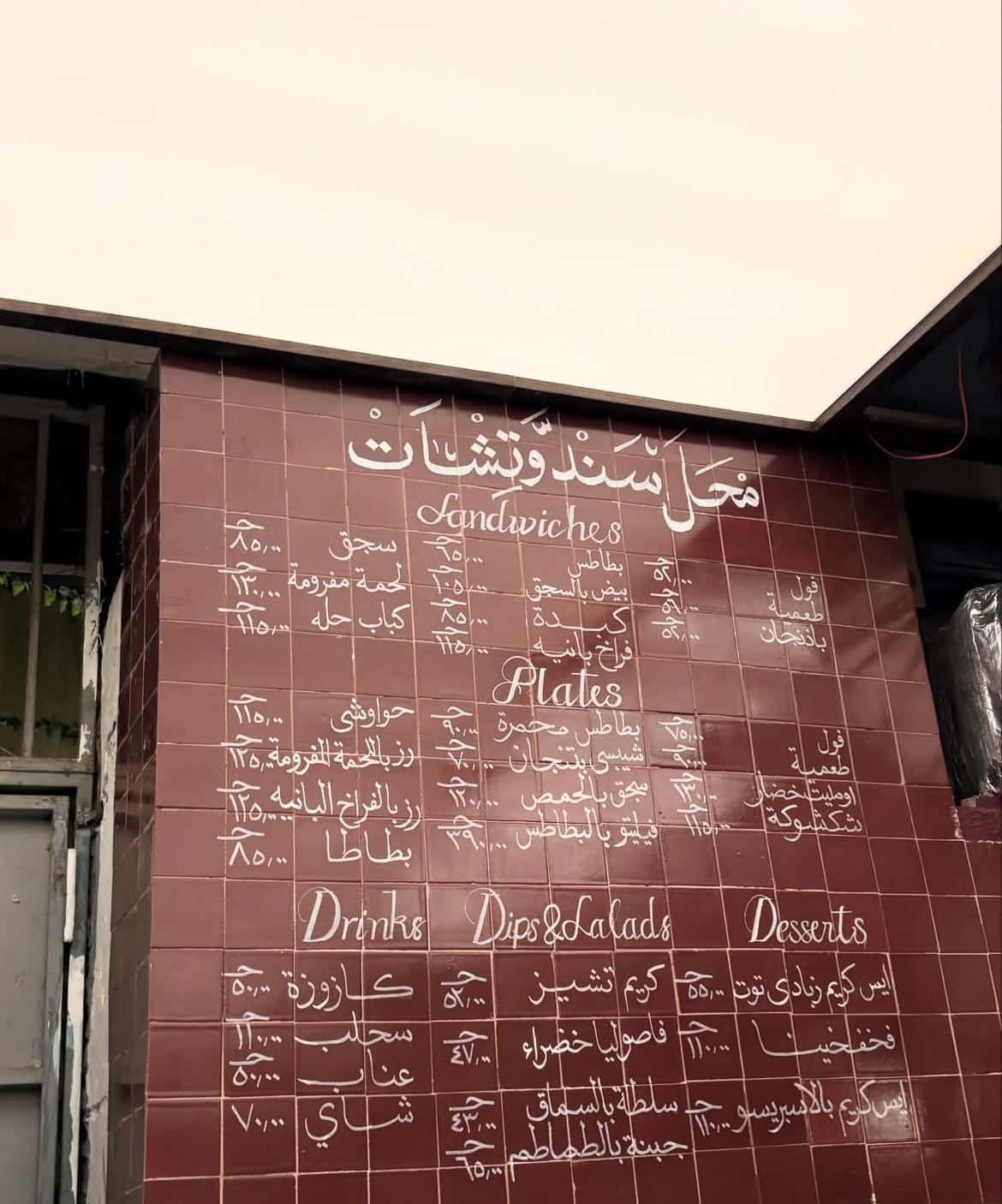
Intentions vs. outcomes
Some observers on social media, who visited the store, argue that 6901 attempted to integrate with the community, sourcing bread from a local bakery, hiring the same makwagy whose workplace once occupied the space, and spotlighting him so that clients would support his work.
These gestures complicate the narrative and suggest that not all creative projects entering Downtown are extractive or dismissive.
Yet, intentions alone cannot erase structural dynamics. A 2023 book published by Bristol University Press shows that when creative spaces open in historic, low-income neighborhoods, they often reshape social hierarchies in ways their founders never intended.
According to a 2003 Urban Studies article published by Sage journals, the arrival of artists and creative industries tends to introduce forms of elite consumption into working-class districts, subtly shifting who the neighborhood is designed to serve.
The 2021 book further explains how urban struggle and everyday labor can be lifted out of context and turned into a curated aesthetic, an attractive backdrop for visitors rather than a lived reality for residents.
This does not imply malice. It simply reflects a wider pattern where culture from marginalized communities becomes a symbol, while the community itself remains economically excluded.
Why using labor and livelihood as aesthetic symbols is complicated
The makwagy is not just a visual motif. It is a profession tied to long hours, physical strain, and inconsistent income.
When a working-class livelihood becomes a photo backdrop for customers paying hundreds of pounds for a drink or buying local clothing, with prices starting at EGP 900 (USD 19) for hand-crocheted headpieces and reaching up to EGP 7,000–8,000 (USD 168) for shirts, a power imbalance becomes visible.
Globally, sociologists call this aesthetic gentrification, when the “look” of poverty, informality, or struggle becomes desirable for branding. At 6901, this dynamic appears in how working-class symbols, such as the makwagy’s workspace, are reinterpreted as part of a curated aesthetic experience aimed at higher-income visitors.
6901 is part of a broader cultural shift in which Downtown is increasingly viewed as a canvas for reinvention. This shift can be positive, revitalizing neglected spaces and attracting creative energy. But it also risks turning real people’s livelihoods into visual tropes for consumption.
Egypt’s cultural scene is evolving rapidly, and with that evolution comes the responsibility to celebrate heritage without simplifying it, to draw from working-class culture without turning it into a backdrop, and to create new spaces without erasing the people who have long shaped the place.
The opinions and ideas expressed in this article are the author’s and do not necessarily reflect the views of Egyptian Streets’ editorial team.
To submit an opinion article, please email [email protected].





Comments (0)