
The unassuming street canine, known in Egypt as the Baladi dog, which translates into “local dog”, has been called the “default,” “native,” “village,” and “street” dog on TikTok, where users note seeing it in places as varied as Nigeria, Kenya, the Philippines, Sri Lanka, Zimbabwe, and Brazil.
Lacking a purebred lineage, the mixed-breed Baladi dog’s resilience, adaptability, and understated charm have nonetheless made it a familiar and often beloved presence worldwide.
An anonymous user on a TikTok video wrote, “nobody owns the dog.” Another user called Gosbert described it as “a survivor. Attends all parties and funerals.”
“You feed him once, and he is your friend forever,” WACK00, a TikTok user, commented.
Around the world, the ubiquitous dog goes by different nicknames. In Zimbabwe, it is known as “Bhoki,” which is slang for dog. In Brazil, it is affectionately called “Caramelo”, referring to its caramel-like color of light brown. South Africans often refer to it as “Bobby”, a common affectionate name, while in Jamaica, it is known as“Brownie,” also in reference to its color. In Mexico, the dog is called “Solovino,” which means “comes alone,” a nod to its stray origins.
It is called “Potlicka” in Belize, a country in Central America, which means pot licker, referring to its habit of eating leftover food. Similarly, it is known as “Potcake” in the Bahamas. In Suriname, a country in South America, the name “Bruintje” is common, meaning little brown one, and in the Dominican Republic, it is called “Vira-lata”, which means can-turner, as street dogs knock over trash cans looking for food. In Zambia, the street dog has the common nickname of “Bingo.”

Though each country has nicknamed its mixed-breed, the underlying spirit remains the same. They are hardy, smart, and resourceful canines that have evolved to survive in harsh conditions against all odds.
Unlike pedigree dogs, which have carefully documented bloodlines, bred to emphasise certain physical features, the street dog confuses its neighbours.
In the Philippines, it is believed to be of the Aspin breed, short for ‘Asong Pinoy,’ meaning a Philippine dog. In Southern Africa, the common stray dogs are believed to be Africanis dogs. Both breeds represent a diverse population of mongrel free-ranging dogs, which are mixed-breed dogs that do not fit into any formally recognized breed category.
Much like their lookalikes abroad, the Egyptian Baladi dog varies in personality and appearance. Some are lean, others stockier; some have short legs, others long, and many feature alert ears.
According to National Geographic, Baladi dogs are mixed-breed descendants of modern breeds like the Egyptian Saluki, Pharaoh Hound, and Canaan Dog. However, others argue that they are a distinct breed, tracing their lineage back to the ancient dogs revered by the pharaohs.
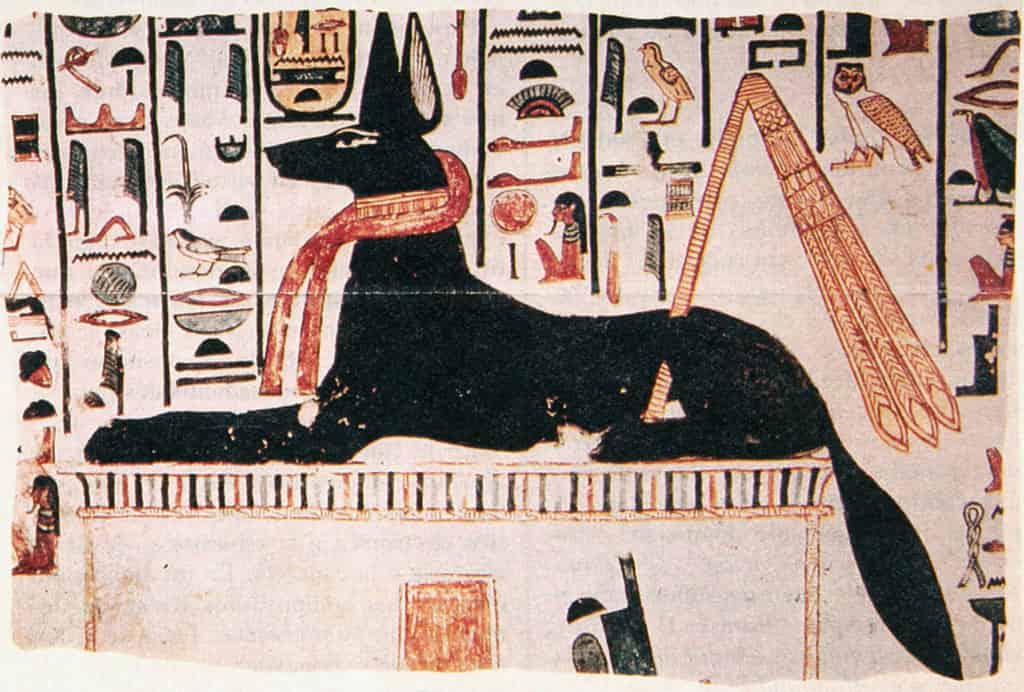
In ancient Egypt, several gods were depicted with the heads of domestic dogs or jackals, resembling today’s Baladi dogs. Anubis, the god who guided souls in the afterlife, is the most famous example. Dogs also appear in tomb art, including a painting in Tutankhamun’s tomb showing the pharaoh hunting with his dog.
Modern science supports this ancient connection.
In 2019, the Animal Protection Foundation (APF), a non-profit organization and dog shelter that provides rescue, shelter, medical care, and re-homing programs inside and outside Egypt, helped a stray dog, named “Amal”, which means “hope”, recover from serious injuries, and a family in the United States of America adopted her.
The family had her DNA tested through Embark, a leading dog DNA service and research partner of Cornell University’s College of Veterinary Medicine. The results showed that Amal is an Indigenous Ancestral Dog, with a genetic lineage dating back 15,000 years, the earliest days of the human-dog relationship, predating any recognized dog breed.

Her genetics showed no direct link to modern breeds, and scientists from Embark suggest that dogs like her may have formed the foundation from which today’s breeds developed.
What makes the Baladi dog remarkable is how healthy and resilient it is. As a mixed-breed, it benefits from greater genetic diversity, which contributes to longevity and lowers the risk of major diseases like organ disorders and cancer, according to a 2020 study by Linnaeus University in Sweden.
However, it can still face issues such as ruptured cranial cruciate ligaments, diabetes, accidents, and behavioral problems, including aggression. By contrast, purebred dogs are more susceptible to inherited disorders, inbreeding depression, and a shrinking gene pool.
The Baladi dog, free from the overbreeding problems that plague some purebreds, has a strong immune system, sharp instincts, and undeniable loyalty, despite rarely being “owned” in the traditional sense.
In a world obsessed with purebreds and designer pets, the Baladi Dog reminds us that survival, uniqueness, and charm do not require a pedigree. The free-roaming dog is a living testament to adaptability and resilience. It is a true survivor with the heart of a lion and the soul of a friend.
Seen on the streets of Cairo and in the corners of Rio de Janeiro, the street dog embodies an unclaimed, underestimated, yet unforgettable global presence.
It is called “Potlicka” in Belize, a country in Central America, which means pot licker, referring to its habit of eating leftover food. Similarly, it is known as “Potcake” in the Bahamas.





Comment (1)
Hello, I live on a beach in Sharm El Sheikh. I have been observing these dogs for years, I find them remarkable. One their prominent traits is the lack of aggression. it is rare they fight with each other and even more rare they show aggression to humans. Here on the beach they cycle in and out every 6 months or so. I have lived with an individual for months only to find it gone suddenly, replaced by a different dog or dogs. One dog that was here for close to a year turned up in Nabq about 15km away. She was happy and friendly as always.