


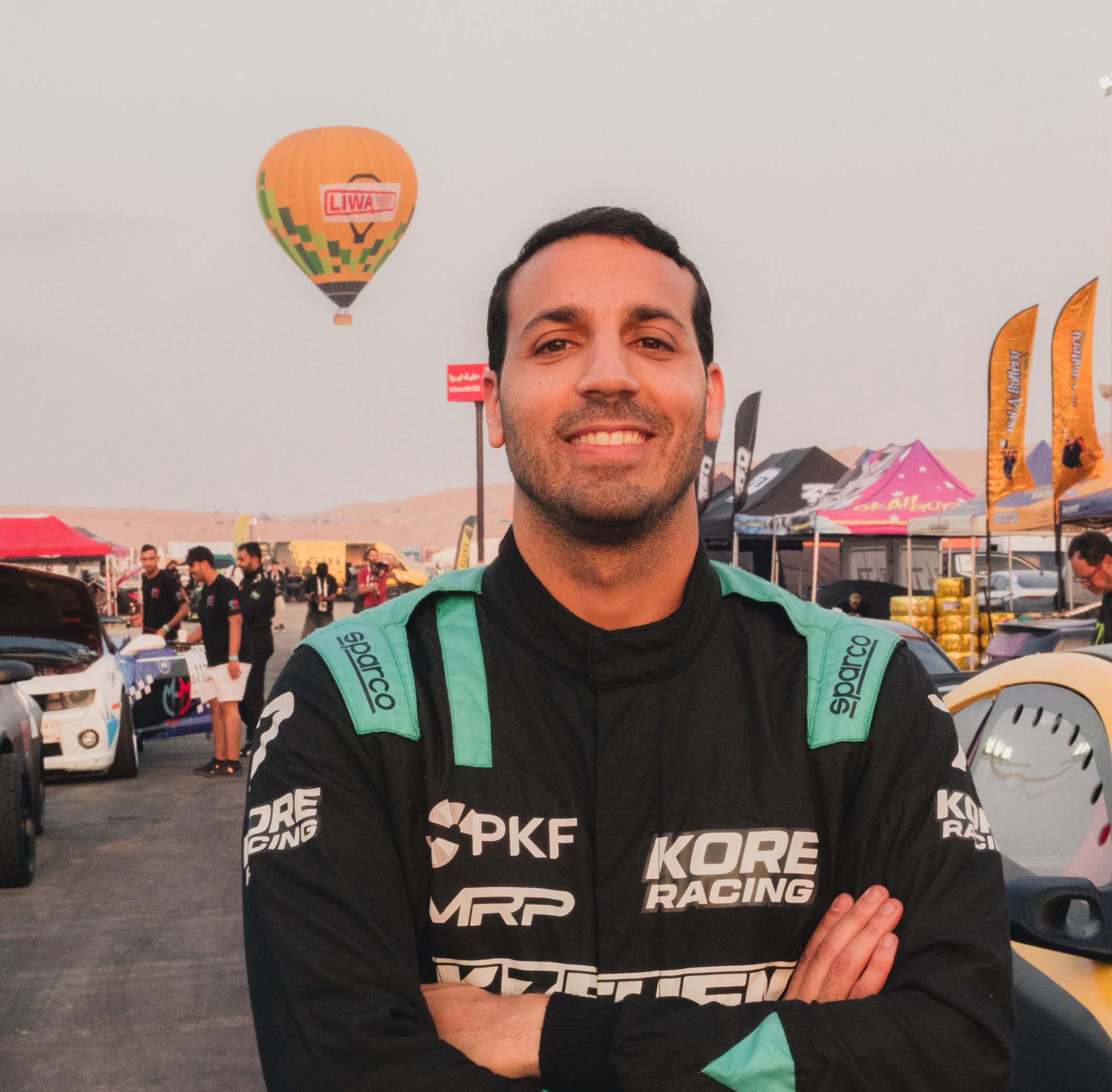
There is a particular silence before a drift run begins. Not the absence of sound, but the pause that holds everything in place for a fraction too long. Engines hum, tires wait, bodies brace. For Karim Hany, that silence has come to mean something else entirely. It is the space where doubt used to live, and where certainty now insists on staying.
When Hany qualified for the World Drift Championship in Latvia, he became the first Egyptian driver to reach the sport’s highest competitive level. But to frame the moment as a milestone alone would miss the point.
“Honestly, it meant more than just a result,” he said. “It was proof — to myself first — that coming from Egypt is not a limitation.”
For years, drifting at a global level existed at a distance. Not geographically, but structurally. Different systems. Different access. Different assumptions about where elite drivers are supposed to come from. Hany felt that gap early, and carried it with him.
“For years, drifting at a world level felt distant for drivers from our region,” he said. “Qualifying showed me that if you’re willing to work harder, travel more, and accept discomfort, you can break that barrier.”
“I didn’t just qualify for myself — I opened a door.”
When belief catches up with performance

Breakthroughs rarely announce themselves in dramatic fashion. More often, they arrive quietly, disguised as routine competence. For Hany, that moment came mid-season, somewhere between Jordan and the UAE, racing drivers who had been doing this longer, with more support, more laps, more certainty.
“There was a point mid-season where I stopped feeling like I was ‘catching up,’” he said. “Once you’re no longer surprised by your own performance, that’s when things shift mentally.”
What shifted was not speed, but composure. Professional drifting is not about spectacle alone. It is repetition under scrutiny, precision under fatigue, discipline when adrenaline begs for chaos.
“The biggest adjustment was precision under pressure,” Hany said. “In professional drifting, it’s not about one good run — it’s about repeating near-perfect runs every time.”
The margins, he explains, are unforgiving. “The margins are extremely small, and learning to stay calm while being pushed to your limit was the hardest part.”
Latvia: speed without mercy
Latvia’s championship track is fast in a way that feels personal. It does not test courage so much as commitment. Half-measures are exposed instantly.
“Mentally, it’s about respect — not fear,” Hany said. “Latvia demands commitment at very high speed, and hesitation is punished instantly.”
Preparation, for him, is ritualistic. “I’m visualizing the track constantly and treating preparation as seriously as driving itself.” The physical toll is just as exacting. “At those speeds, fatigue shows immediately.”
Neck strength. Reaction time. Endurance. These are not glamorous details, but they are where races are lost before they begin.
Carrying more than a result
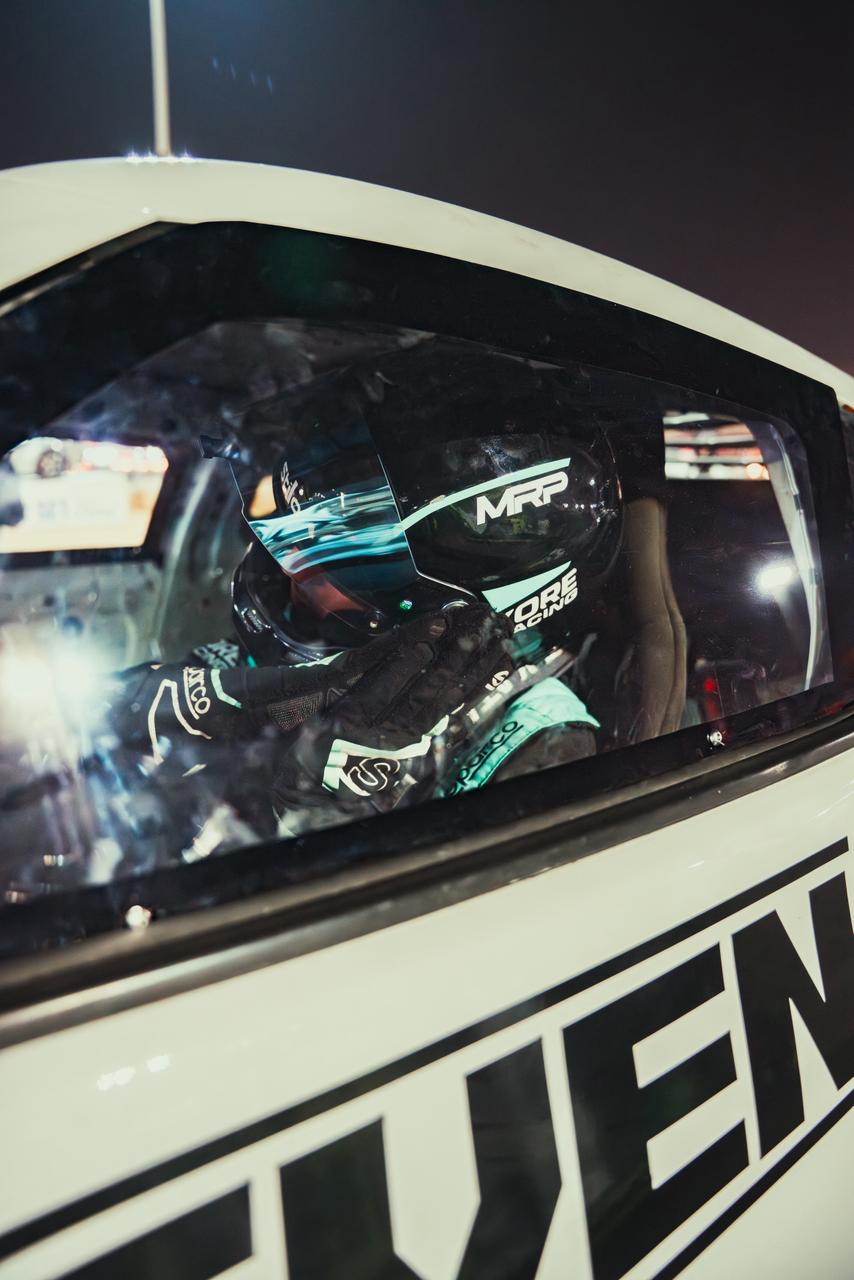
Being first is rarely comfortable. It comes with attention, expectation, and the quiet pressure of representation. Hany is acutely aware that how he performs now will ripple outward.
“It means responsibility,” he said. “I know that how I perform will shape how people see Egyptian drivers after me.”
He does not speak in abstractions. “I’m not just carrying a flag — I’m changing a perception.”
What he wants to change is not passion, but its framing.
“I want Egypt to be seen as a country that produces disciplined, professional, and competitive drivers, not just passion.”
A scene still finding its shape
Drifting in Egypt is no longer invisible, but it is still fragile. Growth has arrived faster than structure.
“It’s growing — no doubt — but it’s still early,” Hany said.
“Today, there’s more talent, more ambition, and more exposure, but we still need stronger systems, sponsorship pipelines, and international integration.”
The raw material is there. “The hunger is there — now it needs direction.”
That direction, he insists, comes from people as much as infrastructure.
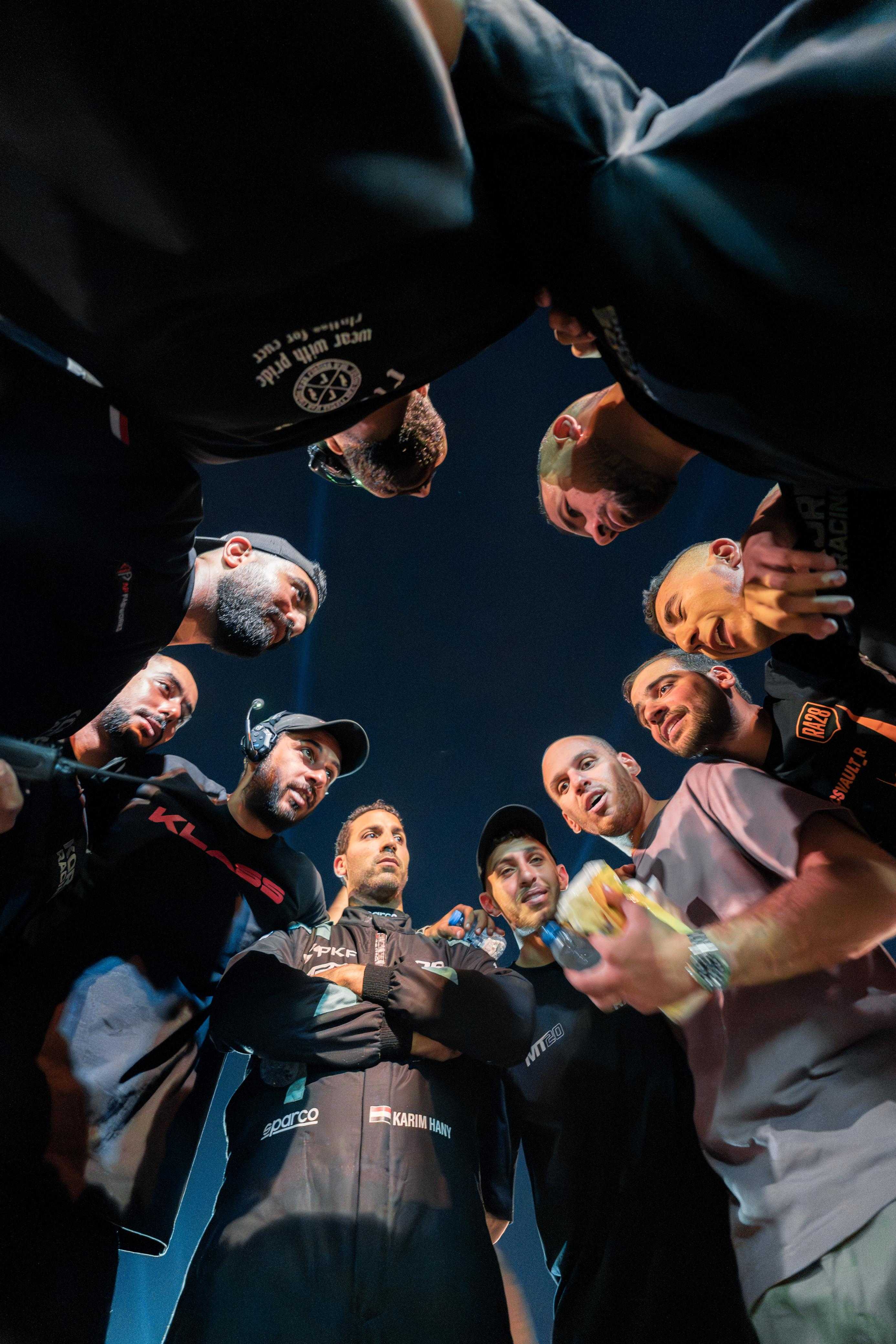
“My team has been everything,” he said. “Motorsport is never an individual sport, no matter how it looks from the outside.”
Support, for him, was not blind encouragement. “Having people who were honest with me — not just supportive — helped me grow faster and avoid costly mistakes.”
Europe and the cost of entry
Next season, Hany plans to enter Drift Masters, Europe’s most elite drifting championship. The challenge is not whether he belongs on track. It is whether the systems around him can keep pace.
“The biggest barriers are logistical and financial, not talent,” he said. “As an Egyptian driver, you have to be twice as prepared before you even arrive.”
Still, he refuses the language of disadvantage. “I see that as motivation, not an excuse.”
What comes after the door opens
For young Egyptian drivers watching from the sidelines, Hany is careful not to sell a myth.
“That the path is real — but it’s demanding,” he said. “Talent alone is not enough.”
What matters more is how seriously the work is treated. “Representing Egypt internationally is possible, but only if you treat it like a profession, not a hobby.”
If there is a single lesson that defines his rise, it is neither speed nor bravery.
“Consistency beats emotion,” Hany said. “Staying composed — whether you’re winning or losing — is what separates professionals from hopefuls.”
In drifting, as in life, style may get you noticed. Control is what keeps you there.





Comments (0)