


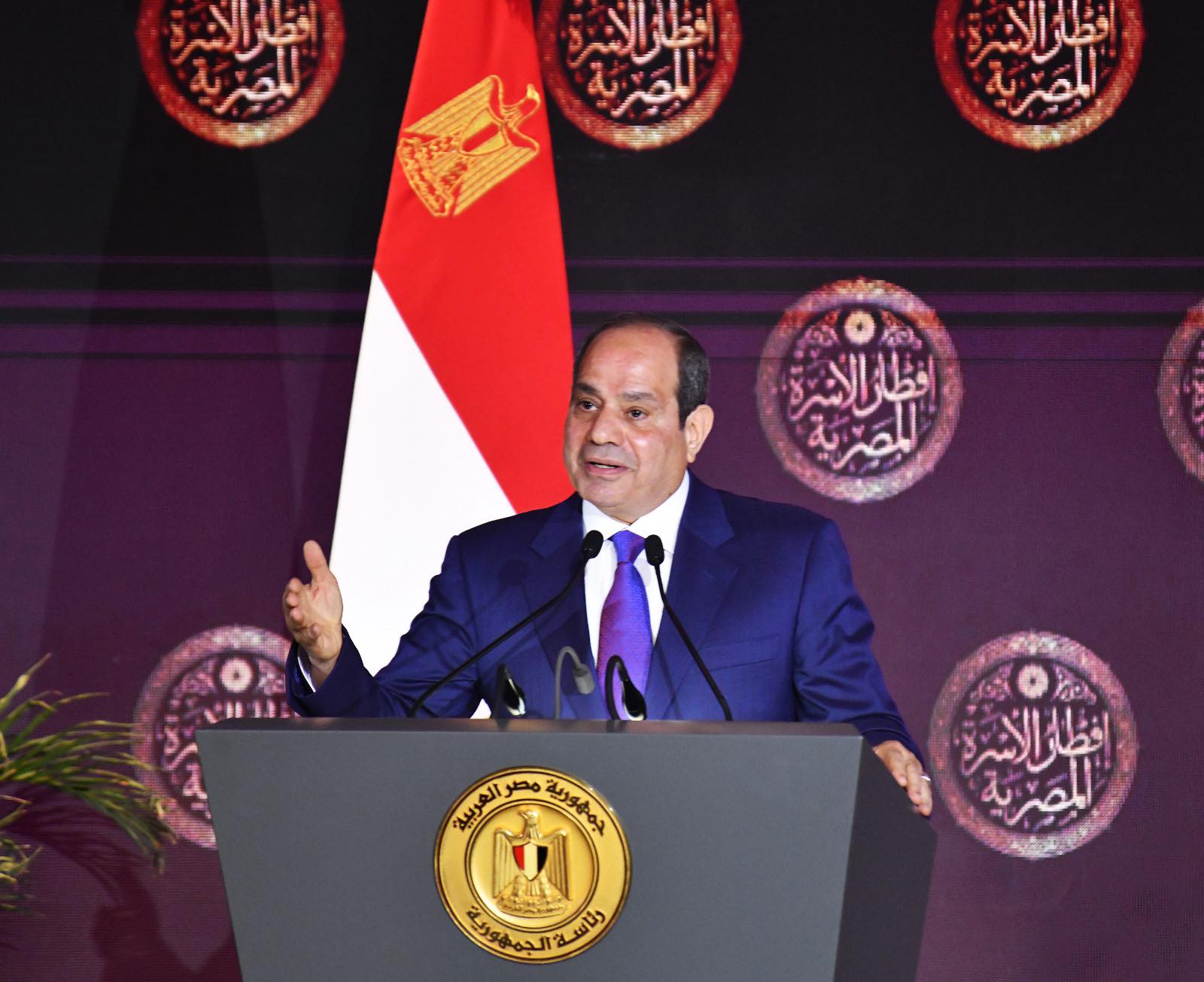
During a recent Egyptian Family Iftar held at the Air Force House in Cairo on Saturday, 14 March, President Abdel Fattah Al-Sisi addressed the challenges facing Egypt in light of regional conflicts and their subsequent impact on the national economy.
He revealed that the Suez Canal has incurred losses amounting to USD 10 billion (EGP 522 billion), attributing this decline to global supply chain disruptions
amid the war on Gaza and Iran’s war with Israel and the United States.
In his speech, Al-Sisi defended the government’s recent decision to raise domestic fuel prices, deeming it an “inevitable” measure necessary to protect the economy.
Acknowledging the negative sentiments among the public regarding these increases, he emphasized that such steps were taken out of necessity to prevent more severe repercussions in the future.
He explained that Egypt consumes approximately USD 20 billion (EGP 1 trillion) worth of petroleum products annually, primarily for powering electricity generation. Had the government opted to charge citizens the actual cost of production, electricity bills would skyrocket to four times their current rates.
Furthermore, Al-Sisi addressed the necessity of a new social protection initiative aimed at supporting low- and middle-income groups in the face of rising costs. While reaffirming the government’s commitment to subsidizing essential goods for vulnerable populations, he stressed that borrowing foreign currency to cover consumption for Egypt’s growing population of 120 million is untenable.
The president also acknowledged media criticisms concerning government transparency and urged officials to provide clearer communication regarding significant economic decisions. He assured citizens that government actions are well-considered and aim to minimize costs for the populace.
On the topic of energy policy, Al-Sisi outlined Egypt’s ambitions to achieve 42 percent renewable energy capacity by 2030, with the hopes of exceeding this target.
Finally, Egypt’s president called for national cohesion during these uncertain times, reminding attendees of the lessons learned from historical conflicts.





Comments (0)