


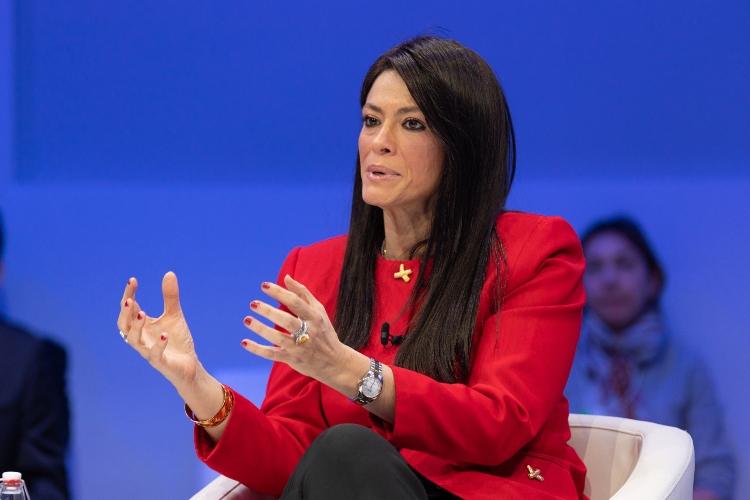
Egypt has historically had a significant impact that goes beyond its boundaries, continuously creating visionaries who guide multinational organizations through important moments in history.
From negotiating geopolitics at the UN to spearheading contemporary lunar exploration with National Aeronautics and Space Administration (NASA), some Egyptian figures have contributed strategic depth to these international platforms.
Ghali: From Egyptian Diplomacy to UN Leadership
Boutros Boutros-Ghali became the United Nations’ (UN) sixth Secretary-General on 1 January 1992, beginning a five-year term after his appointment by the General Assembly on 3 December 1991.
Prior to the UN post, he served as Egypt’s Deputy Prime Minister for Foreign Affairs since May 1991, and as Minister of State for Foreign Affairs from October 1977 to 1991.
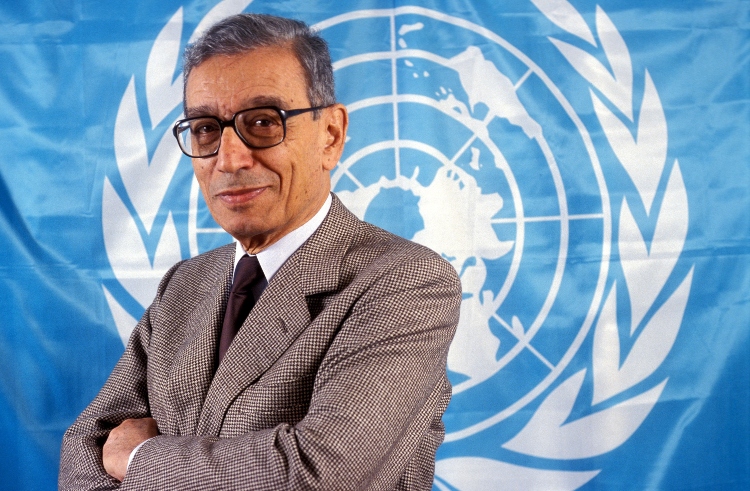
A diplomat, and a jurist, Boutros-Ghali built a career focused on international affairs and multilateral relations. He was a member of Egypt’s Parliament in 1987, part of the National Democratic Party secretariat from 1980, and Vice-President of Socialist International until his UN appointment.
He also served on the International Law Commission (1979–1991) and was previously a member of the International Commission of Jurists.
In September 1978, he attended the Camp David Summit and played a role in negotiating the Camp David Accords, signed in 1979.
Movement of Non-Aligned Countries, and headed Egypt’s delegation to the UN General Assembly sessions in 1979, 1982, and 1990.
With a PhD in international law from Paris University (1949), he also held degrees in law and studied related disciplines in political science, economics, and public law.
Al-Mashat’s Economic diplomacy at the UN
Egypt’s global economic profile also advanced through Rania Al-Mashat, appointed on 20 April, 2026, as UN Under-Secretary-General and Executive Secretary of the Economic and Social Commission for Western Asia (ESCWA).
The appointment was announced by UN Secretary-General António Guterres, who cited her experience in economic policy, development finance, and international cooperation.
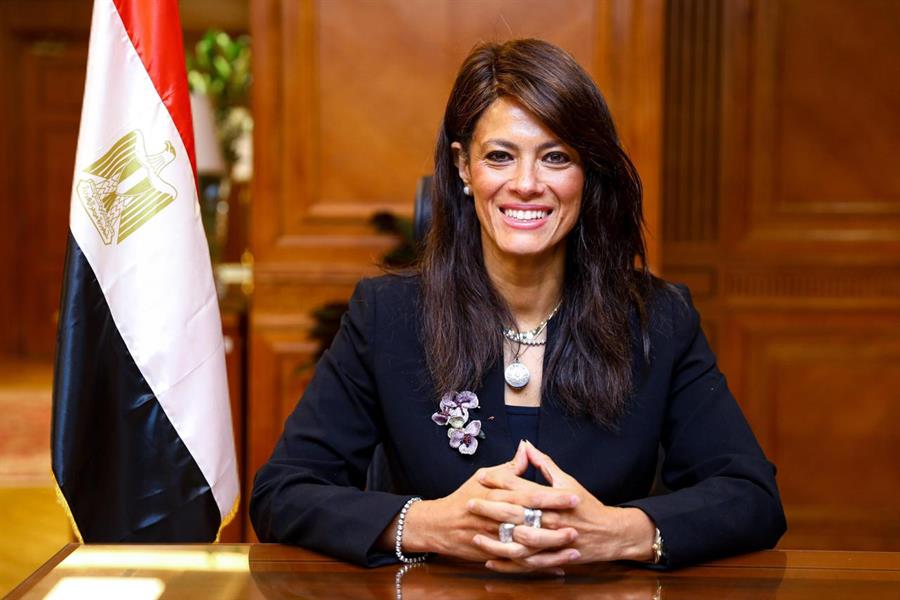
Al-Mashat brings more than 25 years of experience across macroeconomic policy and central banking.
Her work is best described as bridging policy and finance through international partnerships, with particular emphasis on sustainable development, climate finance, and inclusive economic growth.
She served in Egypt’s government for eight consecutive years between 2018 and 2026, holding three ministerial roles. She was Egypt’s first female Minister of Tourism before moving into roles including international cooperation and later planning and economic development.
The timing reflects the challenges facing the region, with conflicts affecting energy markets, trade routes, and supply chains.
ESCWA (headquartered in Beirut) is a UN regional commission serving 21 member states in the Middle East and North Africa. It works to support economic integration and policy coordination across climate change, fiscal policy, employment, and technological transformation.
El-Enany’s UNESCO leadership and cultural diplomacy
Khaled El-Enany was appointed Director-General of United Nations Educational, Scientific and Cultural Organization (UNESCO) on 15 November 2025, becoming the 12th Director-General, the first from an Arab country, and the second from Africa since Senegal’s Amadou-Mahtar M’bow.
Before UNESCO, El-Enany held multiple roles in Egypt’s cultural and tourism sectors, including Minister of Antiquities in 2016 and Minister of Tourism and Antiquities from 2019 to 2022 after the merger of both ministries.
El-Enany directed the National Museum of Egyptian Civilization (NMEC) from 2014 until 2016. Concurrently, he was appointed to lead the iconic Egyptian Museum in Tahrir Square from 2015 to 2016. Running both massive institutions allowed him to align historical assets under a single management framework.
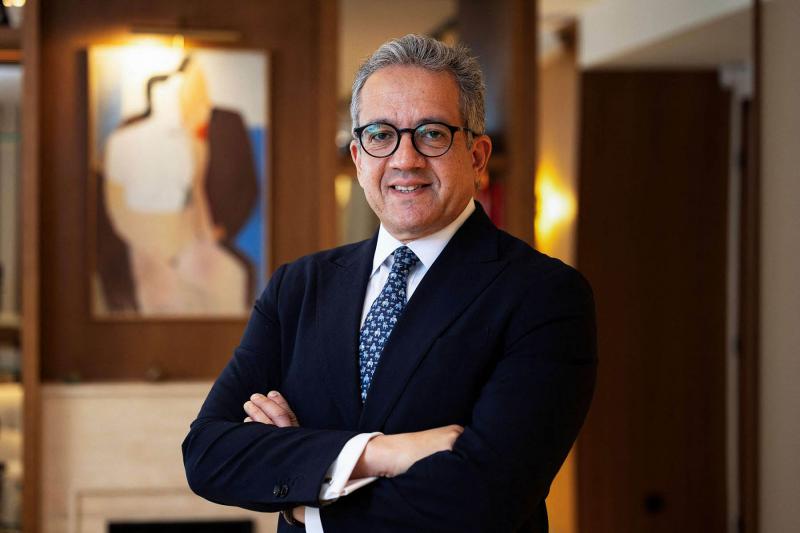
His distinctions include being named Knight of the Order of Arts and Letters in France in 2015, receiving the Order of Merit of the Republic of Poland in 2020, and being awarded the Order of the Rising Sun in Japan in 2021.
He has also been recognized through honorary academic awards and diplomatic cultural appointments, including being named Special Ambassador for Cultural Tourism by UN Tourism and patronage roles connected to heritage.
Sherif Sedky’s Research leadership and national innovation
Sherif Sedky brings a science-and-technology profile to international-standard institutions.
He was born in Cairo in December 1969 and has accumulated over 31 years of experience across regional and international work in the Middle East, Europe, and the United States, including positions connected to universities and scientific organizations.
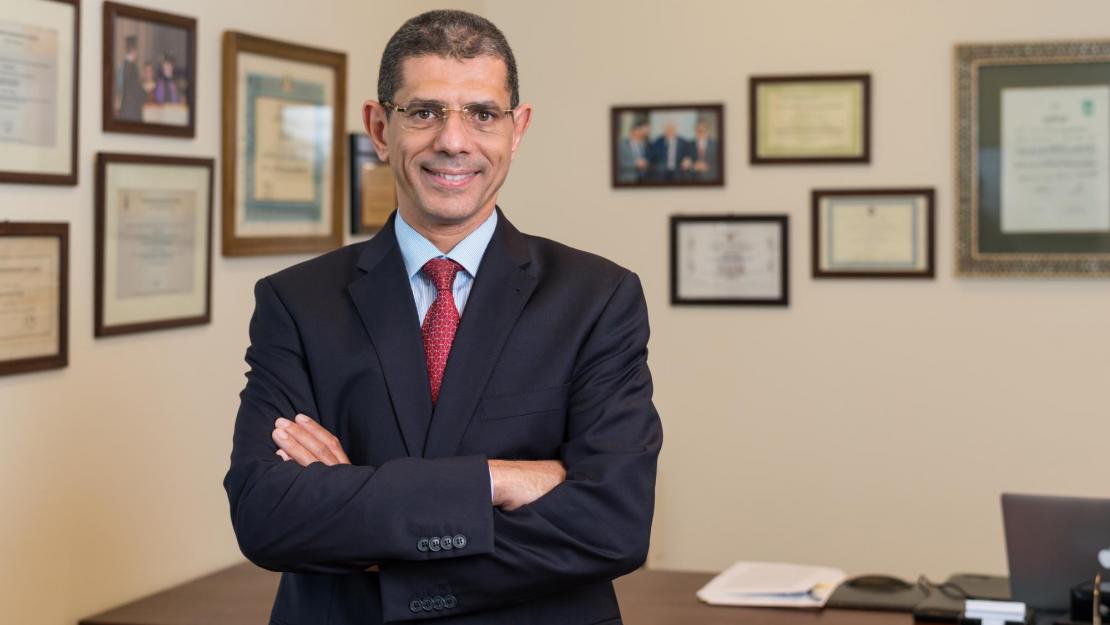
Sedky has authored over 100 international journal and conference papers and holds 19 patents related to miniaturized sensors (microscopic devices that detect environmental changes) and inertial systems, which process that data to map an object’s exact speed and orientation in space.
A major highlight of his career is the development of advanced research infrastructure, including the establishment of a research facility featuring the region’s first clean room (a hyper-filtered, dust-free environment essential for fabricating microscopic electronics without contamination) to support advanced microfabrication and technological development.
In August 2022, President Abdel Fattah Al-Sisi appointed Sedky as Chief Executive Officer of the Egyptian Space Agency, where he currently serves. He has received multiple awards including the Abdul Hameed Shoman Prize in 2014 and national honours for advanced technological sciences, along with recognition for excellence in research.
Farouk El-Baz’s scientific influence in space exploration
Farouk El-Baz is an Egyptian-American scientist recognized internationally for work connected to lunar science and remote sensing.
He is a graduate of Ain Shams University (ASU), earned degrees spanning chemistry-geology studies, a Master’s in geology, and a doctorate in 1964, specializing in economic geology.
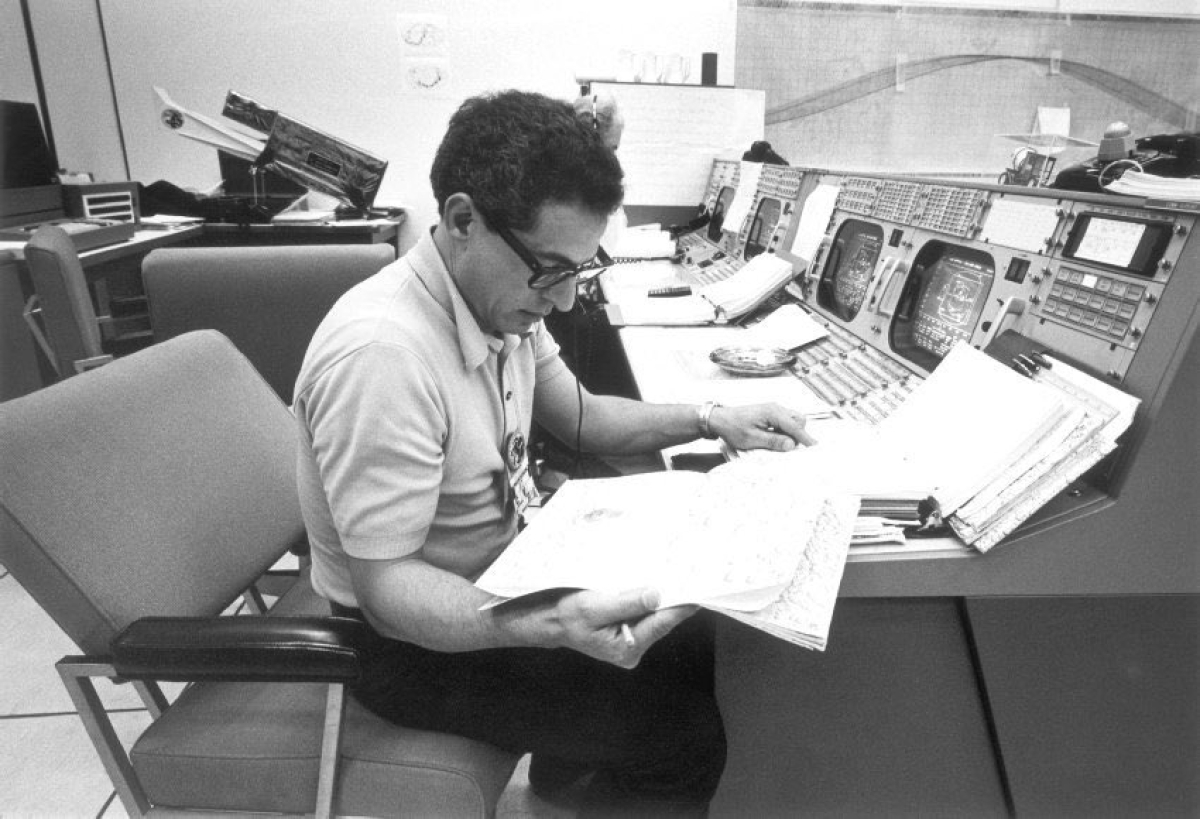
El-Baz held major roles in US scientific institutions, including positions at the Smithsonian and academic and research organizations. He worked as a scientific adviser to President Sadat from 1978 to 1981.
During the Apollo era, El-Baz supervised lunar studies and lunar exploration and was involved in evaluating the NASA program for lunar orbital flights.
El-Baz served as secretary of the Apollo landing board and led astronaut training in general science and moon imaging.
His contributions included training astronauts to select moon samples for analysis and supporting communication around mission results.
Ultimately, these figures prove that Egyptian expertise does more than just participate on the world stage; it actively shapes global diplomacy, science, and culture.





Comments (0)