


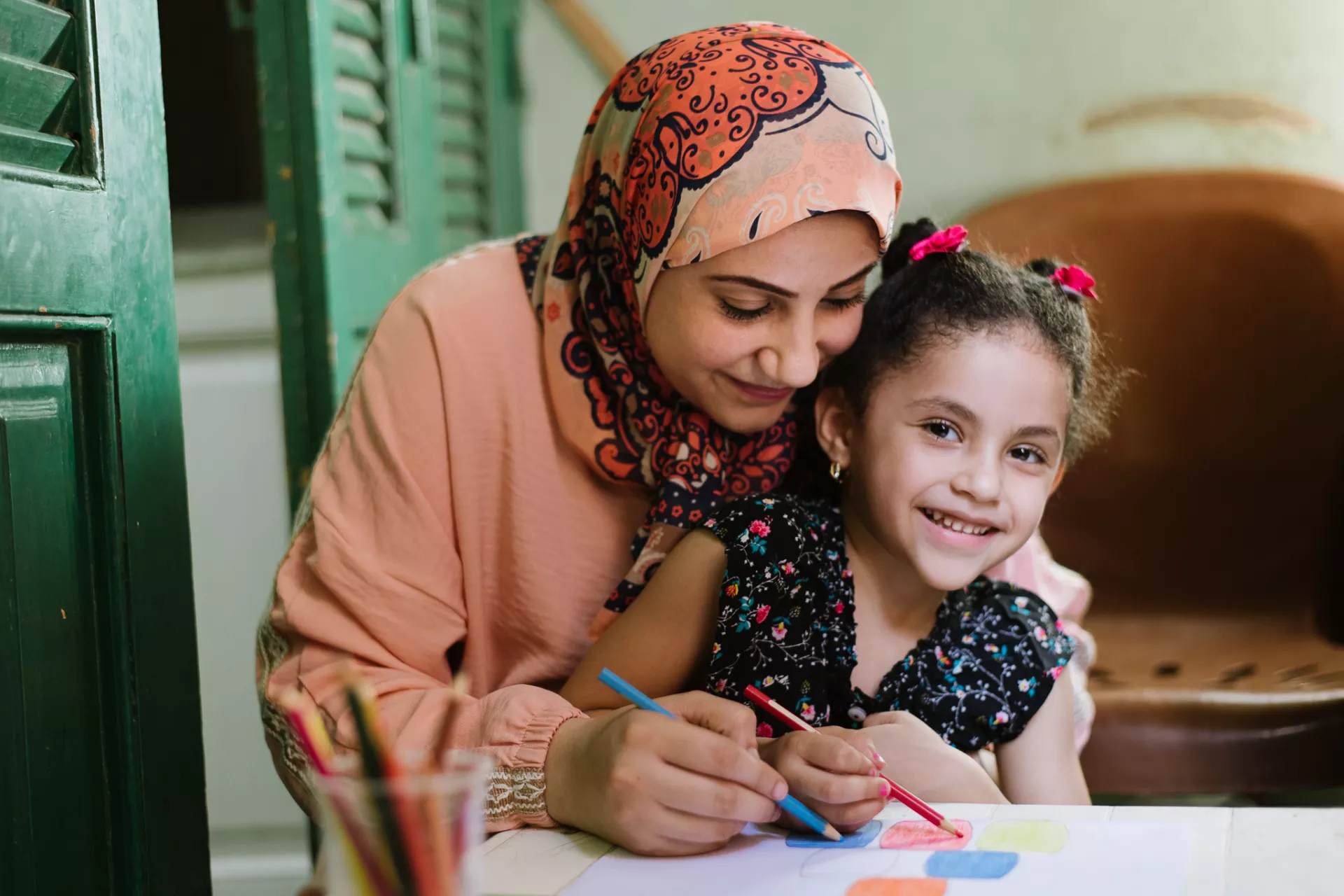
In many Egyptian households, pressure rarely arrives as an argument. It shows up in small, familiar moments: a passing comment about a university major, a reminder that a specific field of study has no future, or a question about marriage framed as concern. These moments often feel ordinary, even caring. Yet over time, they accumulate, shaping how young people understand success, safety, and the limits of choice.
These moments rarely come from open conflict between parents and children. Instead, they reflect a deeper generational divide shaped by different economic and social realities.
For older generations in Egypt, family has long functioned as a collective unit rather than a group of independent individuals. A 2024 study published in the on parenting in the Middle East, published by Springer Nature, found that strong parental involvement in children’s lives is rooted in cultural norms that emphasise takafol (solidarity), mutual care, shared responsibility, and collective survival across generations. Within this framework, guidance is often driven less by control than by a sense of obligation.
Stability as a Form of Protection
In Egypt, where public support for unemployment, housing, and income instability remains limited, families often rely on their own efforts to secure long-term stability. With public education under strain and incomes uncertain, parents often pour time and money into their children’s education and career paths, seeing them as the safest way to protect their future.
“I just want him [her son] to be secure,” said a 50-year-old mother and general manager at a petroleum company. “Fields like engineering or medicine mean he’ll have a stable job and a good income. Life is expensive, and I don’t want him to struggle later.”
Years of economic strain have reinforced this way of thinking.
Household budgets have been stretched by prolonged inflation, which peaked at nearly 38 percent in 2024 before easing to around 14 percent in 2025. Rising prices eroded purchasing power, making everyday life more expensive for many families. At the same time, unemployment remains a persistent concern for young people entering the labour market, even as the official rate stands at around 6.4 percent.
For Egyptian parents, these pressures were shaped in a narrower world, one where choices were limited, deviation carried risk, and stability was something to be preserved at all costs.
Under prolonged uncertainty, families often learn to avoid risk altogether. A 2019 study published in the Journal of Economic Behavior & Organization found that financial insecurity increases risk aversion, leading families to prioritise predictable life paths. Stability, in this sense, becomes a survival strategy rather than a personal preference.
Younger generations, however, came of age during a period of repeated national and global shocks. Many grew up amid the economic fallout of the COVID-19 pandemic, declining tourism revenues, currency devaluations, and the ripple effects of the war in Ukraine on food and fuel prices. More recently, the war on Gaza and regional instability have reinforced a sense of uncertainty about the future.
While economic pressure has intensified rather than eased, digital exposure has expanded what feels imaginable. Online platforms offer constant visibility into alternative careers, lifestyles, and definitions of success that were far less accessible to previous generations.
Published in the Catalan Journal of Communication & Cultural Studies, a 2020 article on social media influencers and online identity among Egyptian youth reveals how social media have reshaped how young people imagine work, identity, and success. Constant exposure to global lifestyles, alternative careers, and personal narratives has made paths visible that were largely inaccessible to their parents’ generation.
This shift is also visible in how younger Egyptians define success.
Research on intergenerational value change in Egypt, published in 2015 by the American University in Cairo (AUC), found that younger generations increasingly place greater emphasis on autonomy, self-expression, and personal fulfilment. While parents often prioritise stability as a form of protection, younger Egyptians navigate a world that feels broader in imagination, even if it remains just as unforgiving in reality.
This gap creates quiet friction. Each generation is navigating the world using a different sense of what is safe, possible, and worth risking.
“Growing up, my parents made it feel like the only paths that guaranteed success were medicine or engineering,” said Mirna Ahmed, 25, a master’s student. “Online, I began seeing people build careers through content creation, freelancing, and other fields that were never presented to us as real options.”
Parental expectations are rarely delivered as ultimatums.
Instead, they are passed down through everyday interactions. A 2025 study on parental expectations and adolescents’ happiness, published in BMC Psychology, found that these expectations often surface through casual comparisons with relatives, repeated emphasis on “secure” careers, praise tied mainly to grades, or advice framed as concern about the future. Over time, children internalise these messages, turning them into personal standards that shape confidence, ambition, and self-worth.
Letting go, then, is not simply a matter of changing one’s mind. It requires unlearning beliefs formed over decades of economic uncertainty, social responsibility, and the fear that one wrong decision could undo years of sacrifice.
Daily realities continually reinforce parental anxiety. Rising living costs, unstable incomes, and the pressure to plan for education or housing mean that even small decisions carry weight. These conditions shape how parents guide their children, often narrowing acceptable paths in the name of protection.
This pattern is well documented in psychology. The Family Stress Model, developed in the 1990s by sociologist Rand Conger through long-term studies of families, explains how economic pressure heightens parental stress, which in turn influences parenting behaviour. Under these conditions, expectations around education and career often become more rigid, functioning as safeguards against uncertainty.
Communication styles further widen the gap. A 2025 study on cultural factors influencing parent-child communication, published in the Journal of Psychological Research in Family and Culture, found that older generations tend to favour indirect expression and emotional restraint, while younger Egyptians increasingly value openness and negotiation.
What one generation experiences as guidance, the other may perceive as pressure. What feels like respect to one side can feel like silence to the other.
Seen in this context, the debate looks different. The struggle is not about tradition versus modernity, nor obedience versus rebellion. It is about inherited survival strategies colliding with a changing social reality.
This helps explain why parental expectations in Egypt remain so persistent, even when they create stress for younger generations. Shaped by daily habits and long-standing fears about security, these expectations are difficult to undo. The challenge, then, is not to dismiss parental guidance altogether, but to adapt it to a present shaped by different economic pressures, social realities, and definitions of success.
The opinions and ideas expressed in this article are the author’s and do not necessarily reflect the views of Egyptian Streets’ editorial team.
To submit an opinion article, please email [email protected].




Comments (0)