


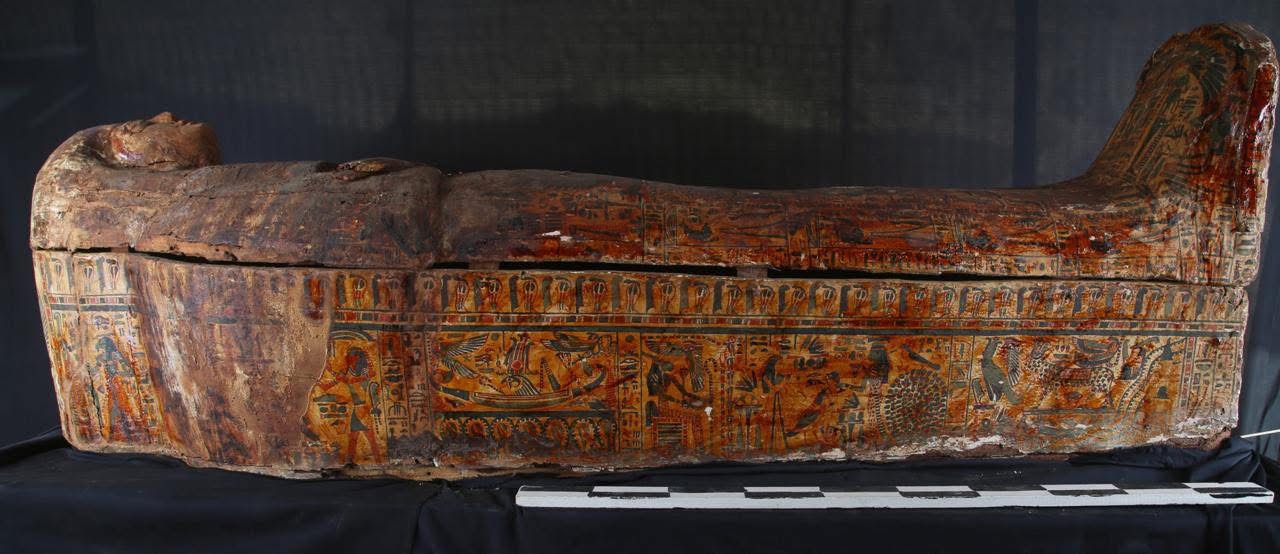
An Egyptian archaeological mission has uncovered a cache of colorful coffins containing mummies, along with a collection of rare papyri dating back to the Third Intermediate Period of Ancient Egypt, during excavations in Al-Qurna on the West Bank of Luxor.
The discovery was made by a joint mission from the Supreme Council of Antiquities and the Zahi Hawass Foundation for Archaeology and Heritage while working in the southwestern corner of the courtyard of the tomb of Seneb.
According to Egypt’s Minister of Tourism and Antiquities Sherif Fathy, the discovery represents a significant addition to Egypt’s growing list of archaeological finds and reflects the state’s continued support for archaeological research and heritage preservation.
The cache dates back to the Third Intermediate Period, specifically Dynasties 21 to 25, and includes 22 brightly painted wooden coffins still containing mummies. The coffins were discovered inside a rectangular chamber carved into the rock that appears to have served as a funerary storage room.
Archaeologists found the coffins arranged in several layers, stacked in ten horizontal rows, demonstrating a remarkable level of organization. In order to maximize space, the ancient Egyptians placed coffin lids separately from the boxes, allowing more coffins to fit within the chamber.
Former Minister of Antiquities and head of the mission Zahi Hawass described the discovery as “exceptional”, noting that it offers valuable insight into burial practices during the period.
Researchers are now attempting to determine the identities of those buried in the coffins. Many of the coffins bear professional titles rather than personal names, with the most frequently appearing title being “Singer of Amun” or “Chantress of Amun,” indicating a possible connection to temple musicians serving the ancient Egyptian god Amun.
The mission also uncovered several pottery vessels believed to have been used during the mummification process.
One of the most intriguing discoveries is eight papyri, found inside a large pottery jar, some still sealed with their original clay stamps. Once restoration and translation are completed, researchers believe these documents could provide valuable new insights into the religious and social life of ancient Egypt.
Excavations at the site are ongoing as archaeologists continue searching for the original tombs from which the coffins may have been moved.





Comments (0)