

//Skip to content
Generic selectors
Exact matches only
Search in title
Search in content
Post Type Selectors
TMG Projects TMG Projects

Major Discovery at Athribis: Uncovering 13,000 Ancient Ostraca

March 17, 2026
mm

By Belal Nawar

Senior Journalist

Photo Source: Egyptian Ministry of Tourism and Antiquities Official Facebook Page
mm

By Belal Nawar

Senior Journalist


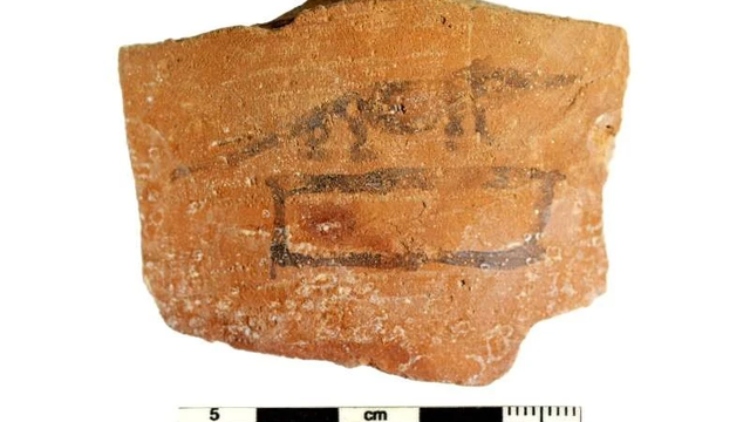
On 11 March, a joint Egyptian-German archaeological mission uncovered approximately 13,000 inscribed pottery fragments, known as ostraca, at the ancient site of Athribis located in Sohag Governorate, Upper Egypt. 

This discovery, announced by the Egyptian Ministry of Tourism and Antiquities, provides invaluable insights into the social, economic, and religious fabric of ancient Egyptian life.

The mission, a collaboration between Egypt’s Supreme Council of Antiquities and the University of Tübingen, has enriched the archaeological record, bringing the total number of ostraca found at Athribis to around 43,000 since excavations began in 2005. 

This total sets a new global record for the largest quantity of ostraca found at a single archaeological site, surpassing previous discoveries at renowned locations such as the workers’ village of Deir el-Medina, which has been extensively studied for over two centuries.

The ostraca, fragments of ancient pottery, served as economical writing surfaces for various purposes, including administrative documentation, educational exercises, and religious texts. 

Preliminary analysis indicates that 60 to 75 percent of the newly discovered ostraca are inscribed in Demotic script, while 15 to 30 percent feature Greek writings. 

Additionally, a smaller portion includes Hieratic, Hieroglyphic, Coptic, and Arabic texts, reflecting the multicultural and multilingual nature of ancient Egyptian society.

Egyptologist Hussein Abdel Bassir underscored that ostraca are unique in their ability to reflect the daily lives of ordinary people, providing a more nuanced understanding of social and economic history.

The diversity of languages and scripts represented in the ostraca showcases the administrative complexity and cultural vibrancy of Egyptian society throughout different historical periods.

The location of Athribis itself adds another layer to this discovery. Situated approximately 7 km west of Sohag, Athribis was once a significant urban center in ancient Egypt and a focal point for the worship of the lioness goddess Repit. 

Historical accounts suggest that it played a pivotal role in the socio-economic dynamics of Upper Egypt, evidenced by the vast array of ostraca unearthed at the site.

 Christian Leitz, head of the German mission, noted, the diverse range of texts provides a substantial contribution to the study of language evolution, administration, and cultural practices in ancient Egypt.

Minister of Tourism and Antiquities Sherif Fathy emphasized that such discoveries enrich Egypt’s social history and reflect the country’s rich cultural heritage.

The continuous unearthing of significant archaeological materials indicates that the sites of Egypt still possess vast resources that can illuminate the details of the past.

Comments (0)