


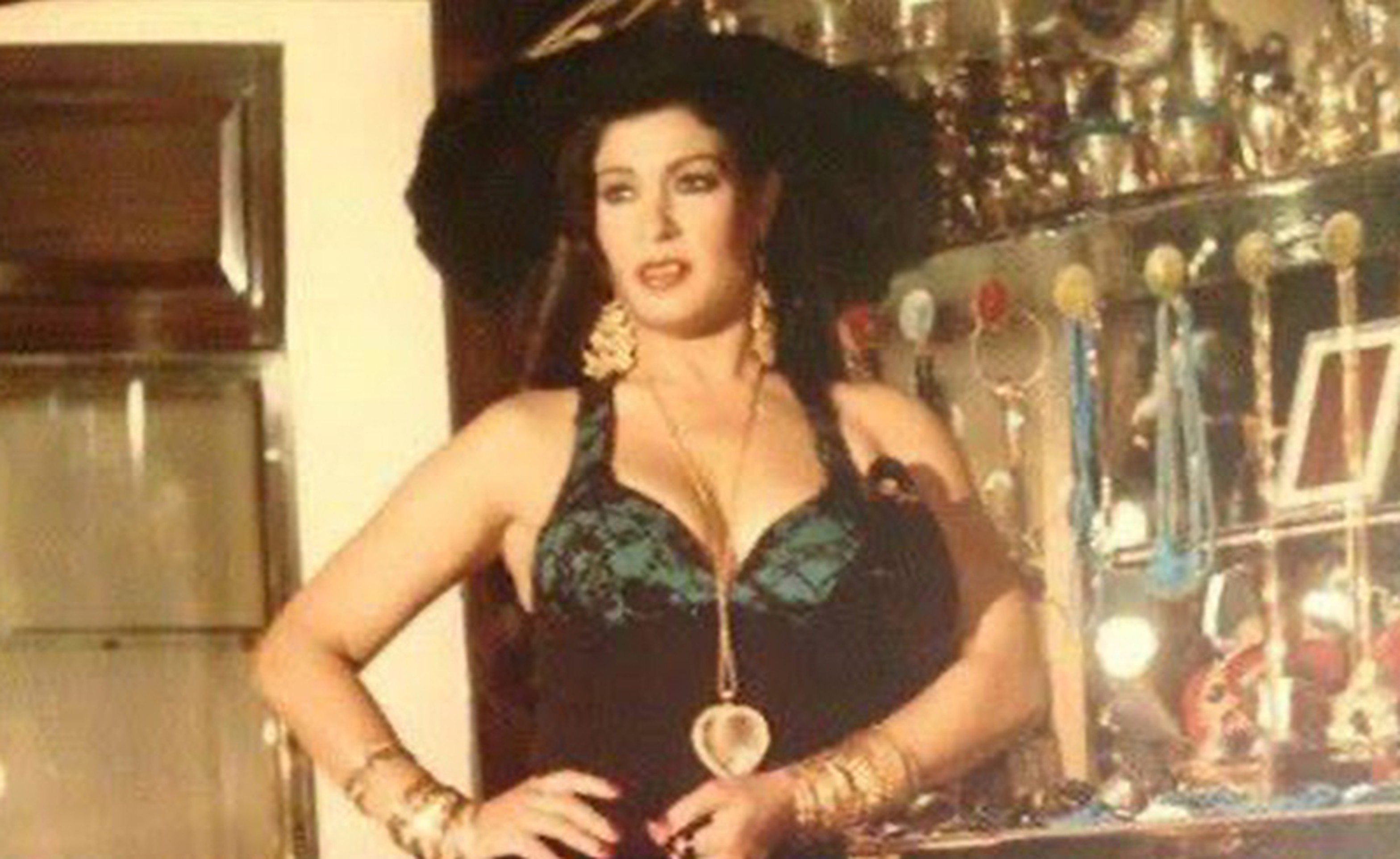
A sly wink. A slightly teasing smile. A hand poised beneath the chin, gold bangles cascading along the arm. It is an attitude unmistakable in its essence, one so vividly embodied by Egyptian women. A sensual confidence that has, over time, become a national symbol in its own right: the spirit of bint al balad (daughter of the country).
So powerful, yet just as sensual and feminine, is how scholars and researchers have long described the ‘bint al-balad’ archetype. She is not an easy woman to pin down or contain, not one to be neatly boxed into society’s labels. She resists it all, defining her own sensuality on her own terms, drawing from nothing but her country as her source of inspiration.
It is a whole attitude to life, a way of manoeuvring through the maze of society with a certain ease, staying clever yet feminine, powerful yet soft, playful yet serious. And while the ‘bint al balad’ archetype has long been embodied by many actresses in films and even in novels, one figure unmistakably stands apart, one who still exists, still breathes within our culture today, and that is Fifi Abdou.
Fifi Abdou is a famous Egyptian belly dancer and actress, widely considered one of the most iconic figures in belly dancing in Egypt and the Arab world. In very simple terms, she is the embodiment of the ‘bint al balad’; the young girl who stepped out into the wilds of society and still chooses to smile and laugh.
Though she may be, at a glance, just a belly dancer, her body and her movement are not hers alone to claim, but part of a cultural language that, for centuries, has known how to find beauty and joy in life, even in its darkest moments.
The Body as a Cultural Language
There is more to language than the words people speak. More than expressions, more than letters, more than tone.
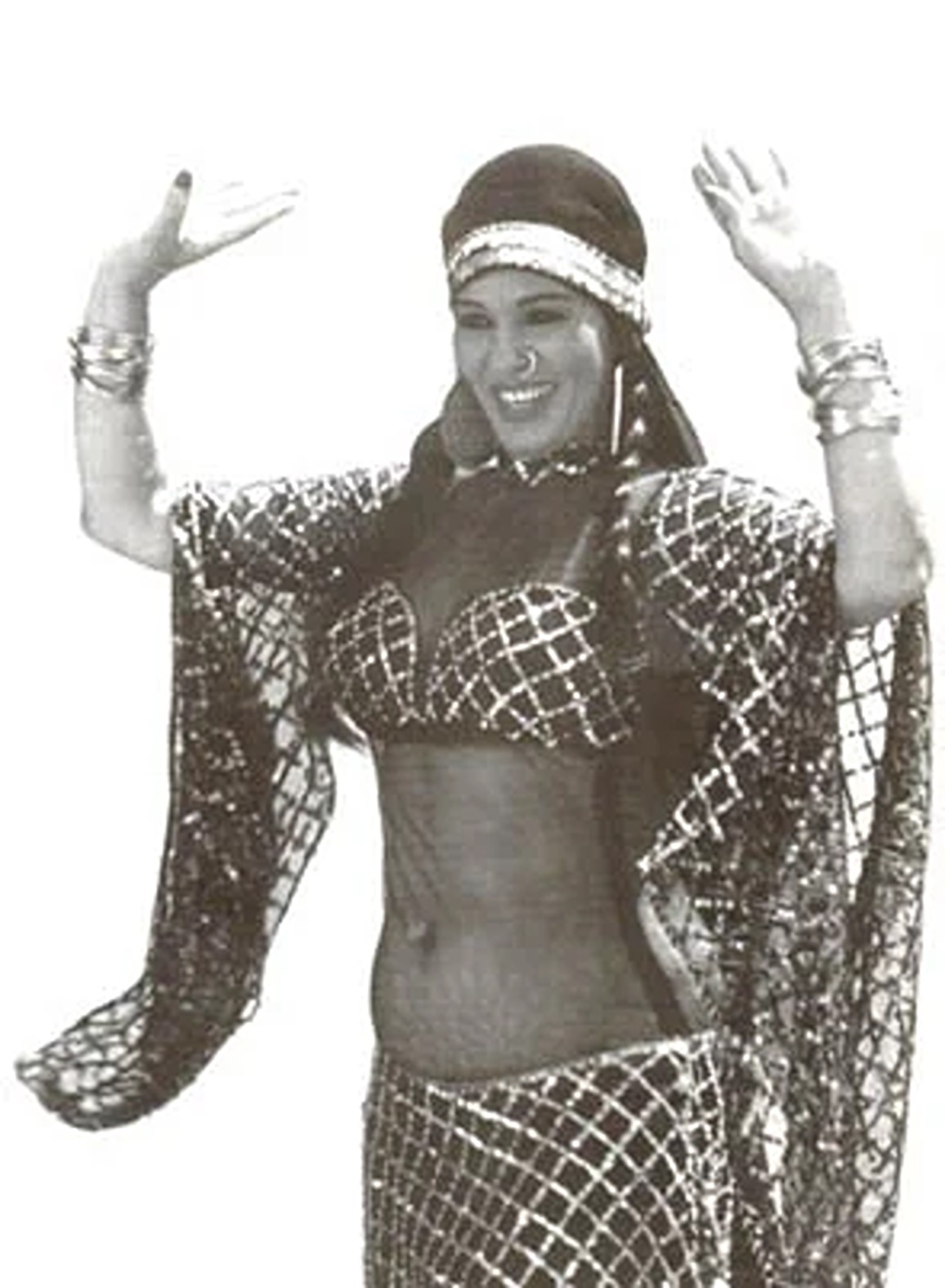
Every language carries an attitude, and Fifi Abdou understood that attitude instinctively, using it to express something deeply Egyptian through the language of the body, through belly dancing. Because that, in itself, is a cultural language of its own.
Born Atiyat Abdul Fattah Ibrahim on April 26, 1953, in Cairo’s working-class district of Embaba, she was one of twelve children raised by a policeman father in a home far removed from any spotlight. She did not grow up with education or inherited fame and wealth, but that humble upbringing allowed her to connect naturally to local culture and understand the spirit of Egypt’s working class.
At just twelve years old, she went against her parents’ wishes to join a neighborhood folklore troupe. Yet despite those rough beginnings of nights with nowhere to sleep, her path took an unexpected turn, lifting her into the ranks of the country’s most iconic belly dancers.
Though dancers are often stigmatized, Fifi Abdou, along with others, emerged at a time that revealed the body as a cultural language in its own right.
The body, on its own, is capable of expressing so much, of exposing a country’s attitude and spirit, and of challenging how willing one is to look beyond the polished image of a woman’s identity toward something more raw. As she once said in 2024, “Belly dancing is part of our DNA and identity, just like language. Preserving and spreading it is a lifelong duty.”
Dance scholar Najwa Adra once observed that dancers unsettle the traditional values of “seriousness” so deeply admired in both women and men. In this light, Fifi Abdou’s dance was never merely a performance of the body, but a language of defiance, of playfulness, and of that distinctly Egyptian ability to find and express joy in life.
Much like Egyptian surrealist artists who used the body to express femininity, belly dancers have used their bodies as both expression and revelation, laying bare how society perceives and responds to the female form, and how women might come to inhabit and understand their own bodies more fully.
Rising to headline at Cairo’s renowned nightclubs and cabarets, she resisted the polished, tourist-oriented style of belly dancing that was gaining popularity. Rather than tailoring her performances to a foreign gaze, she stayed rooted in the baladi (local) spirit, marked by relaxed, grounded hip movements that felt like a natural extension of everyday Cairene life.
Often dressed in a simple galabeya (a loose-fitting, traditional garment from Egypt), she would twirl a cane with playful ease or pause mid-performance for a puff of shisha (also known as hookah), transforming the moment into something that felt more like a street-side café gathering than a formal show.
Her body spoke directly to the music, mimicking lyrics with sharp shoulders and expressive eyes, layering in shaabi (local urban music) and the latest street beats. Where earlier stars had refined the art for cinema, Fifi dragged it back to the soil, making it feel like home again.
She expressed her own femininity through movement, and in doing so, gave shape to a distinctly Egyptian femininity, one that draws students from around the world to Cairo in search of its essence. It was a femininity defined by bold presence, sharp wit, and an unfiltered sense of self.
Scholars and everyday dancers used it to reclaim a distinctly Egyptian understanding of female sensuality, turning the dance into a “symbolic inversion” that let women celebrate their bodies while pushing against modern ideas of “proper” femininity.
A Bint Al-Balad Way of Life
The spirit of the bint al-balad endures. Even if it no longer flickers across screens, it lives on within countless Egyptian women, a way of meeting life with a smile, even as its chaos stares back.
As Fifi Abdou once said, “I’m all about reliving my youth,” a line that perfectly captures her spirit and sense of self. More than that, it reflects a simple, liberating philosophy; one that many could take to heart.
There is a very specific cultural meaning behind the phrase bint al-balad. It is not simply “a girl from the neighbourhood.” It refers to a woman who knows how to navigate life with instinct. Someone who reads people quickly, who can defend herself with humour before confrontation, and who refuses to appear weak, even when life has been anything but easy.
Fifi’s philosophy is just that, a bint al-balad way of moving through the world, as instinctive and effortless as breathing. As she puts it, “Dancing is the oxygen of my life,” and she moves through life the same way she does on stage.
Whatever comes her way, she meets it in motion, responding with dance instead of resistance. After all, why simply stand still?
And, that is the power of the bint al-balad: she dances her life into existence, effortlessly, and always with a wink and a smile.
The opinions and ideas expressed in this article are the author’s. To submit an opinion article, please email [email protected].






Comments (0)