


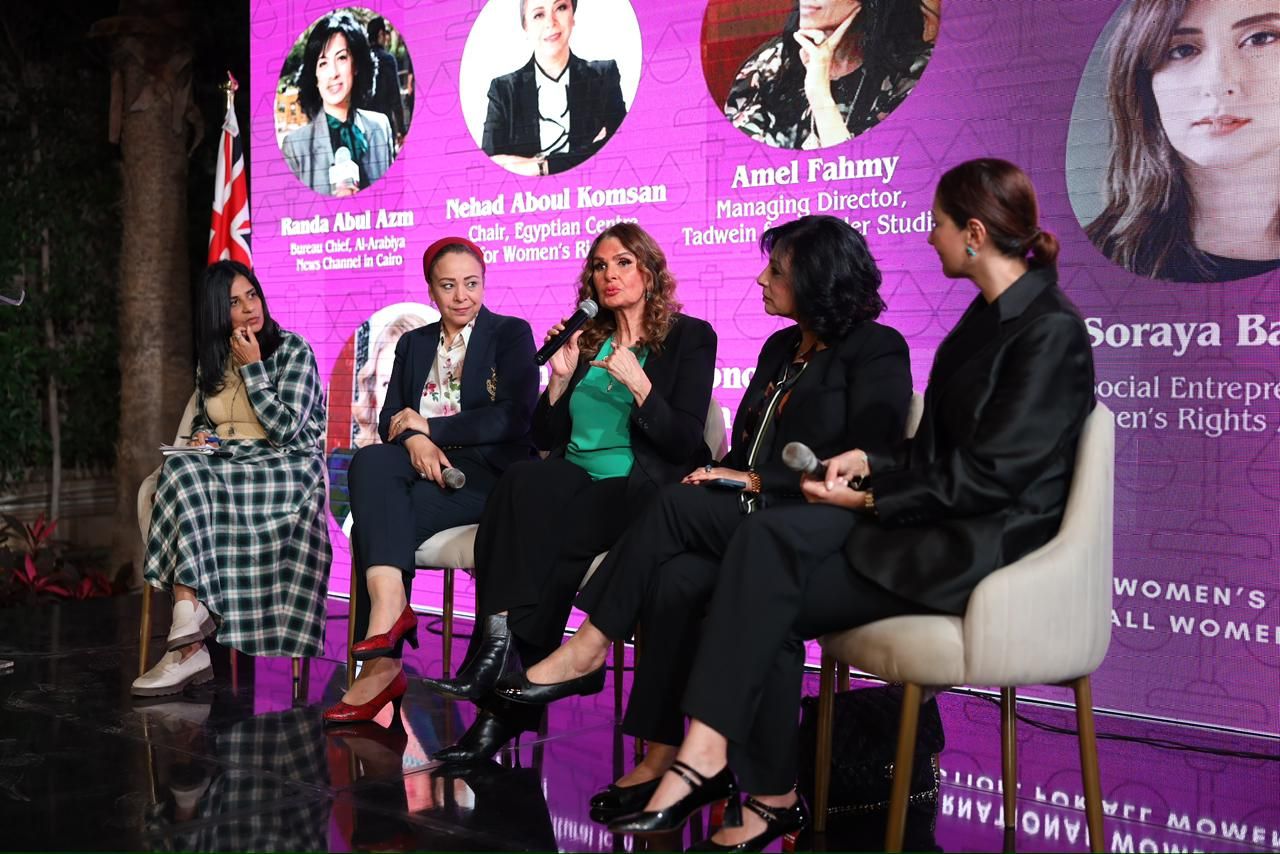
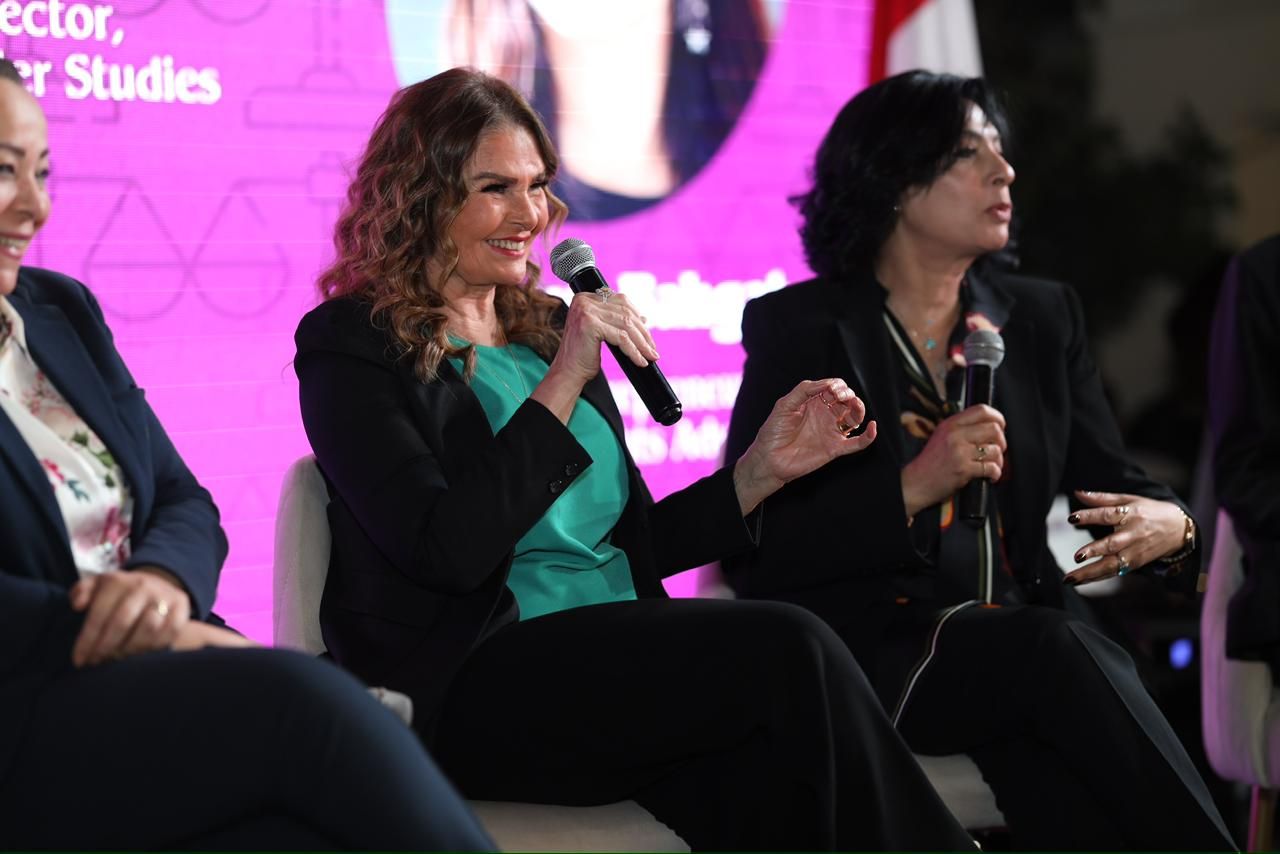
“Reality is far more terrifying than anything we portray on screen,” Egyptian actress and cultural icon Youssra said during a panel discussion titled Balancing the Scales to mark International Women’s Day at the Australian Ambassador’s Residence on Tuesday, 14 April.
“We impose our own form of censorship as artists, yet the truth is even harsher and darker than what we can imagine.”
The actress was referring to her work in films and series such as Qadeyet Ra’y ‘Am (A Case of Public Opinion, 2007) and Leilet Eid (The Night of the Feast, 2024), both of which confronted women’s social issues, particularly taboo subjects like sexual violence, and the ways they were received within Egyptian society.
While cinema operates within defined boundaries of censorship, the panel brought forward a far starker, unfiltered reality. It moved beyond polished narratives and unreliable figures, laying bare the enduring challenges women continue to face.
Moderated by Soraya Bahgat, the discussion featured Randa Abul Azm, Bureau Chief for Al Arabiya News Channel in Cairo; Nehad Aboul Komsan, Chair of the Egyptian Center for Women’s Rights; and Amel Fahmy, Managing Director of Tadwein Center for Gender Studies.
The event occurred at a particularly sensitive moment, coming shortly after the tragic Alexandria incident in which a divorced mother died after falling from a building, leaving a final plea for society to care for her two children.
It also followed directives from President Abdel Fattah Al-Sisi to parliament to amend Egypt’s personal status law and establish a Family Support Fund. These proposed changes seek to address shortcomings in the current system and introduce broader reforms related to divorce, alimony, and child custody.
“Fabricated statistics and narratives are, unfortunately, a reality. They influence not only public opinion but even decision-makers, and, at times, members of parliament,” Aboul Komsan said.
In light of the proposed changes to the personal status law, there have been discussions and narratives centered around the fact that women are often the initiators of divorce through khula, which is a procedure based on traditional jurisprudence that allows a Muslim woman to initiate a divorce by giving up her rights. However, according to Aboul Komsan, these narratives are not based on facts.
“It is often claimed that 80 percent of divorces in Egypt are through khula. In reality, 96 percent of divorces are initiated by men, while only 4 percent are initiated by women, and those women often endure lengthy legal processes,” Aboul Komsan noted.
“Women resort to khula because it is faster, even though they give up all their financial rights just to escape the cycle of violence,” she added. “If there were efficient and accessible justice, women would pursue divorce through the courts and receive alimony. But many choose to forfeit everything in order to leave abusive situations quickly.”
On average, a khula case takes around four months. In some instances, it can be resolved in 40 to 60 days, and at most, it may take up to six months, Aboul Komsan explained. By contrast, pursuing a divorce that preserves a woman’s rights can take two to three years, as it requires investigations, evidence, and multiple legal procedures.
Even after the divorce is granted, the woman must continue fighting for her rights through further legal battles, which can extend the process to four years or more.
Aboul Komsan argued that helping women move beyond these legal battles requires more than simply passing new laws; many have already been introduced over the years. What is truly essential, she emphasized, is the presence of institutions that actively support women.
“If we cannot provide a simple answer to a very simple question, such as when a woman faces violence and asks, ‘What should I do? Who can I contact? Where should I go?’ Then we are, in effect, doing nothing,” Aboul Komsan said.
Access to justice is critically important for women in Egypt, particularly in personal status and family-related disputes, yet it remains hindered by a range of persistent barriers. Legal proceedings can be costly and time-consuming, often requiring multiple court appearances that are difficult to manage alongside work and caregiving responsibilities.
Many women also lack clear information about their legal rights or the procedures needed to claim them, which can discourage them from pursuing justice altogether.
“We must continue working to answer that simple question for women: What should I do? Where should I go? Who should I contact?” Aboul Komsan said.
Currently, organizations such as the Center for Egyptian Women’s Legal Assistance and the Egyptian Centre for Women’s Rights, along with institutions like the National Council for Women, offer specialized legal aid offices within family courts.
Research conducted by UN Women found that the vast majority of women in Egypt have experienced some form of sexual harassment in their lifetime, with figures reaching over 90 percent in certain studies. Other reports and national data similarly indicate that sexual violence and harassment remain widespread, often underreported due to stigma, fear, and lack of trust in reporting mechanisms.



Comments (0)