


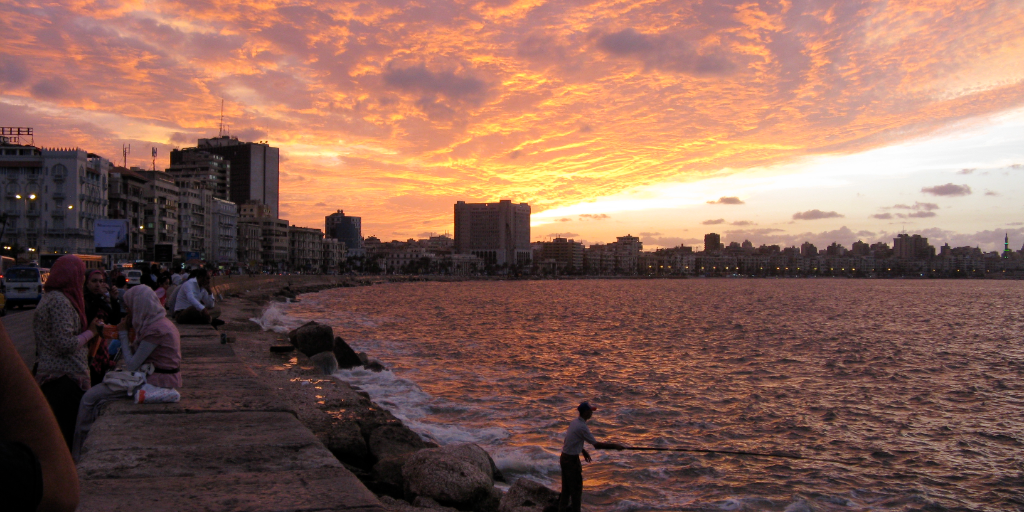
Edward Forster’s book, ‘Alexandria: A History and Guide (1922)’, is imbued with a deep love for the city in which the British writer lived during the First World War. This love Forster translated into two works: the aforementioned, and a collection of sketches of the city, Pharos and Pharillon.
Though millions of tourists visiting Egypt each year are often seen traipsing around the major sites, clutching a guidebook or scrolling through online guides, few are familiar with Forster’s Alexandrian guide.
Yet these guidebooks, commonly published by large travel guidebook companies such as Lonely Planet, Rough Guide, or Le Routard, stand in stark contrast to the approach taken by Forster. Viewing Alexandria through its rich past, Forster saw the city as one of memory, layers, and lost civilisations.
While the modern guidebook includes sections on the history, culture, and politics of the country or city in question, Forster’s emphasis on Alexandria’s cultural depth, alongside his informative guide, provides a refreshing vision of the Egyptian guidebook.

Born in London in 1879, Forster studied history and classics at the University of Cambridge before pursuing what would become one of the more famous careers in British 20th-century writing.
Before publishing his guide to Alexandria, Forster had already enjoyed popular and crucial support for his work, from his first novel, ‘Where Angels Fear to Tread’ (1905), to his better-known works, ‘A Room with a View’ (1908), and ‘Howard’s End’ (1910).
Forster was a humanist, placing human relationships and individual dignity at the centre of his work, championing empathy and personal connection across social, cultural, and political divides.
A conscientious objector in World War One, Forster rejected military service in the British Army, choosing instead to work for the British Red Cross, stationed in Alexandria. In Egypt, the writer met several other artists, most notably the poet Constantine Cavafy.
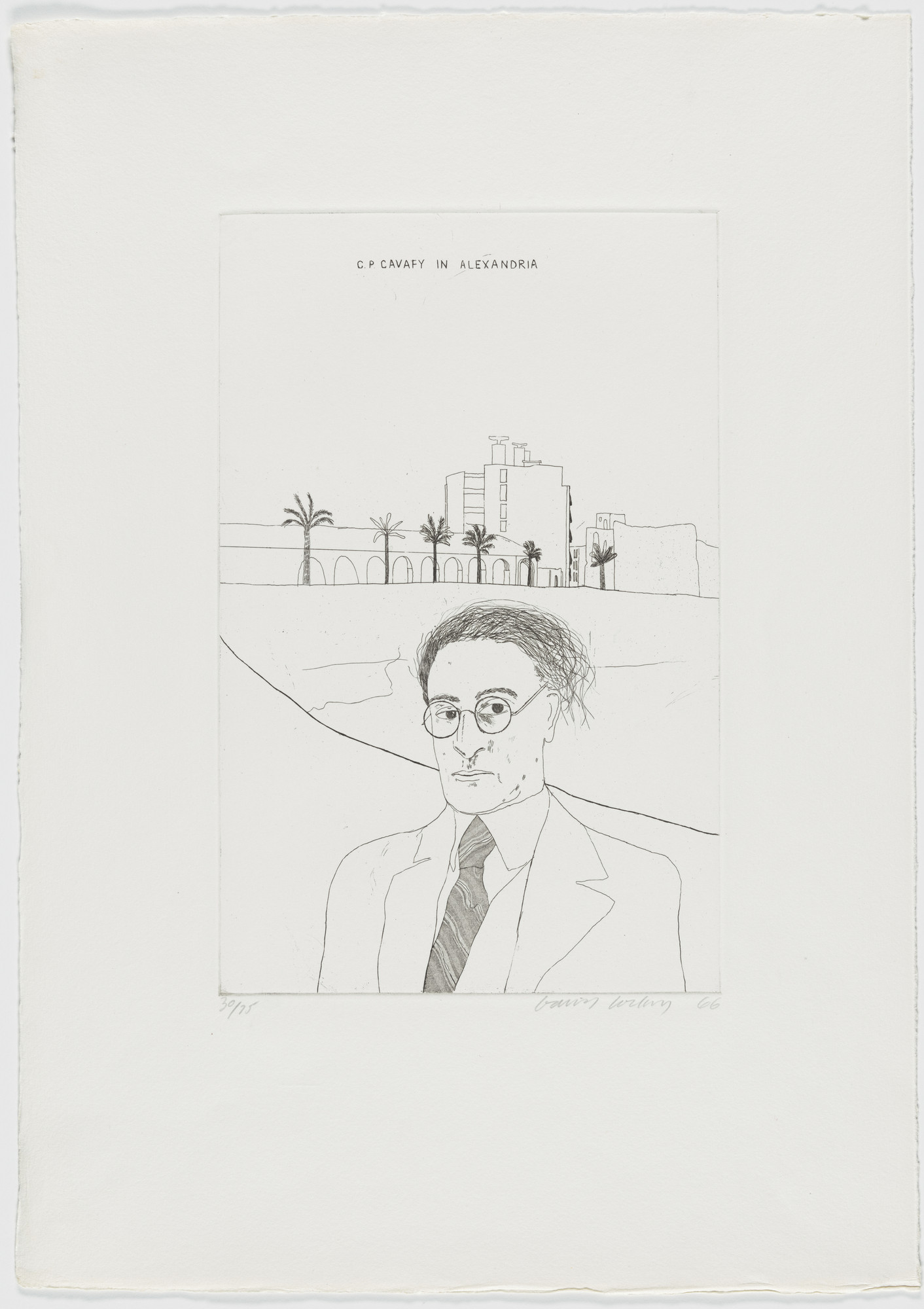
Of Greek origin, though born and raised in Alexandria, Cavafy exemplified Alexandria’s allure to Forster as a cosmopolitan and cultural hub. Tellingly, in his guide, Forster includes Cavafy’s poem, ‘God Abandons Antony’ (1911), translated to English by George Valassopoulo, another Alexandrian resident.
Forster’s cultural focus in his guidebook was, even when published, uncommon. Emerging in the 1830s, the modern guidebook aimed to provide travellers with all the information necessary for a trip abroad. These guides were objective and impersonal, differing from the more sentimental travel literature of the early 1800s.
Pioneered by the Scottish publishing house, John Murray, with its series, Murray’s Handbooks for Travellers, the Handbook for Travellers in Egypt was published in 1847, written by John Gardner Wilkinson, a British Egyptologist.
This neutral style of guidebook exploded in popularity in the second half of the 20th-century, with publishers such as Lonely Planet, Rough Guides, Brandt, and Le Guide du Routard (The Backpacker’s Guide) enjoying massive success. Even now, according to the Independent, in the United Kingdom, guidebook sales have bounced back post-COVID, despite the popularity of online guides.
Three of these publishers, except Brandt, continue to update their guides on Egypt, all releasing new editions in 2025.
As with the first books published by John Murray, these guides prioritise practical information, helping travellers navigate hotels, restaurants, beaches, and attractions.
For example, in the Rough Guide’s guide to Egypt, published in June of 2025, its entry on Alexandria starts: “Alexandria (al-Iskandariya) was Egypt’s capital for almost a thousand years before fading into oblivion, only to be reborn in the modern age as a Europeanised metropolis”.
The guide follows this introduction with a “brief history” of Alexandria, lasting around two pages. Flicking on, the Alexandria section includes a short, half-page explainer box on “Alexandria in Literature”. Here, Forster is mentioned, alongside Cavafy, Lawrence Durrell, a British novelist and poet, and Naguib Mahfouz’s Miramar.
Later explainers in the same section briskly explore the Mouseion, the Pharos (Alexandria’s ancient lighthouse), the ancient library, and Hypatia of Alexandria. However, these are drowned out by descriptions of Alexandria’s sites, restaurants, and bars.

Forster takes a different approach. The first-half of his guide concerns Alexandria’s history, starting with Alexander the Great, then moving onto sections on Ptolemaic literature and science, the Greco-Egyptian, and Christian periods.
Throughout his history, Forster draws attention to the importance of Alexandria’s culture as central to understanding the city’s past. He saw Alexandria’s history and identity as inseparable from the literature that shaped and recorded it. The writer even included long sections on Alexandrian philosophy and theology, introducing the theory of Jewish, Christian, and Neoplatonic Alexandrian thinkers.
Through his use of references and footnotes, Forster fuses the history and the guide, enabling the reader to turn back through the book to find greater detail on a given site. At the start of his guide, Forster writes: “on these references the chief utility of the book depends”.
‘Alexandria: A History and Guide’ remains to this day a reminder that a deeper understanding of Egypt’s rich culture may enrich the tourist’s experience, not just in Alexandria, but across the country.




Comments (0)