


For decades, Egypt has largely been promoted through images of its ancient monuments. The Pyramids of Giza, the Sphinx, and the Nile have long dominated postcards, travel campaigns, and international perceptions of the country.
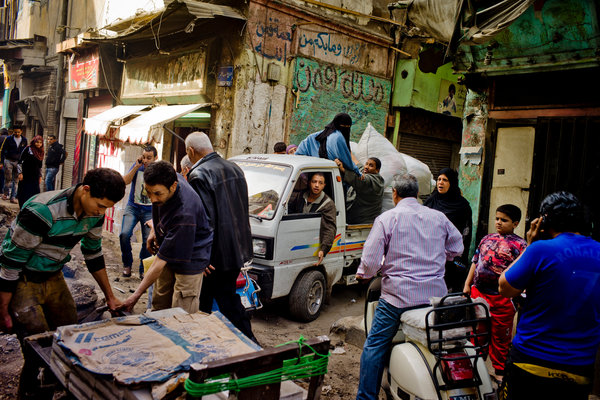
Yet scroll through Instagram, watch DJ Snake’s recent Cairo Express music video, or browse the work of photographers and fashion brands shooting in the Egyptian capital, and a different version of Cairo begins to emerge. Instead of historic landmarks, the focus is often on crowded streets, ageing apartment buildings, cafés spilling onto sidewalks, microbuses weaving through traffic, Arabic shop signs, and the movement of the city itself.
What many residents experience as ordinary has increasingly become part of Cairo’s visual identity.
According to a 2012 study published in the International Journal of Sustainable Built Environment, Cairo’s streets and public spaces are more than physical infrastructure; they are central to the city’s social life, shaping everyday interactions, community participation, and residents’ sense of belonging. These spaces are closely intertwined with Cairo’s identity rather than existing separately from it.
The growing interest in everyday urban life reflects a shift in the kinds of places that inspire creative work. Rather than relying solely on iconic landmarks, artists, filmmakers, photographers, and brands are increasingly drawn to places that feel lived-in and authentic. In Cairo, it is the city’s busy streets, constant movement, and everyday routines that have become part of its creative appeal, providing backdrops for photography, fashion campaigns, and film.
According to a 2019 study published in the Journal of Association of Arab Universities for Tourism and Hospitality, examining tourism in Cairo found that many visitors value engaging with local neighbourhoods, daily routines, and lived experiences alongside visits to historical sites.
That can mean spending time at a neighbourhood ahwa (traditional coffeehouse), trying local favourites such as koshary, wandering through busy streets and markets, or simply observing the rhythm of everyday life beyond the city’s major attractions.
Perhaps that is why Cairo continues to surprise people.
Its appeal is not found only in its monuments, but also in the rhythm of everyday life: the coffee being poured at a neighbourhood café, the balconies crowded with plants and satellite dishes, the microbus stopping in the middle of the street, the handwritten Arabic signs, and the thousands of interactions unfolding simultaneously across the city.
For years, Cairo’s density and unpredictability have often been framed as problems to navigate. Yet increasingly, they are also becoming part of what makes the city memorable.
In an age where authenticity has become a form of visual currency, Cairo’s greatest creative asset may not be its ancient history alone. The city has shown a remarkable ability to make global creative trends its own, transforming ordinary streets and everyday moments into images that feel unmistakably Cairene.




Comments (0)