

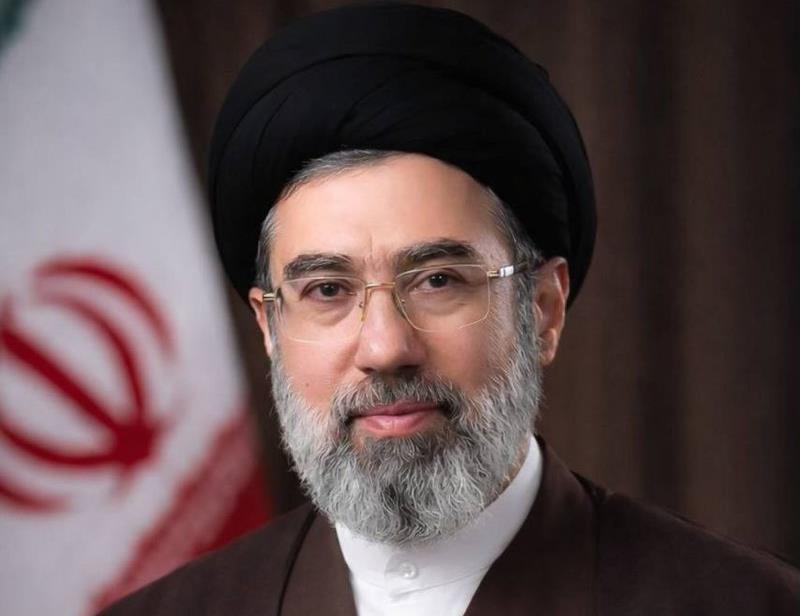
Iran’s Assembly of Experts has named Mojtaba Khamenei as the country’s new supreme leader, elevating the son of the late Ayatollah Ali Khamenei to the most powerful position in the Islamic Republic just over a week after his father was killed in joint US-Israeli strikes on Tehran.
The announcement, carried by Iranian state media outlets including Fars, Tasnim and IRIB on early Monday morning, makes Mojtaba the third person to hold the position since the 1979 revolution and the first to inherit it from a parent, a development that has drawn immediate comparisons to the Pahlavi monarchy the revolution was designed to dismantle.
The Assembly of Experts issued a statement calling on the Iranian people to maintain unity and pledge allegiance to the new supreme leader.
Who Is Mojtaba Khamenei?
Born in 1969 as Ali Khamenei’s second son, Mojtaba grew up in the shadow of the revolution that brought the clerical establishment to power. He studied theology in the seminary city of Qom under the late Ayatollah Mohammad Taghi Mesbah Yazdi, one of Iran’s most hardline clerics. At the age of 17, he joined the Revolutionary Guard and served in the Habib Battalion during the Iran-Iraq War.
Despite his proximity to power, Mojtaba has never held public office. His influence has instead been exercised behind the scenes, acting as a gatekeeper to his father’s inner circle for decades. American diplomatic cables once described him as “the power behind the robes.” He holds the clerical rank of hojatoleslam, a mid-level title below ayatollah, though his father also lacked the higher rank when he assumed power in 1989 and the law was amended to accommodate him.
Mojtaba’s name has been linked to the suppression of dissent since the 2009 Green Movement, when millions of Iranians protested what they saw as a fraudulent re-election of President Mahmoud Ahmadinejad. He is alleged to have personally supervised the IRGC’s crackdown on demonstrators through the paramilitary Basij force. Analysts have also connected him to subsequent waves of protest suppression, including the mass killings reported in January 2026.
The US Treasury sanctioned him in 2019 for what it described as efforts to advance his father’s “destabilising regional ambitions and oppressive domestic objectives.” Bloomberg has reported that he oversees a significant business empire of luxury properties and investments worldwide, none of which are listed under his own name.
Continuity Over Reform
Analysts have interpreted Mojtaba’s appointment as a signal that Iran’s clerical and military establishment is prioritising continuity over transformation. Georgetown University professor Mehran Kamrava told CBS News that the selection would suggest the regime’s instinct is survival: the clerical leadership and the security state closing ranks.
The Carnegie Endowment for International Peace noted that Mojtaba’s ascent was predicated on his proximity to the IRGC and Basij, rather than on theological credentials or political experience. If the succession process reflected the political preferences of the late supreme leader, it would have likely produced a different outcome; Ali Khamenei had reportedly put forward three other names before his death, none of which included his son.
Mojtaba is widely expected to be more hardline than his father. The Council on Foreign Relations has noted his close ties to some of Iran’s most ideologically extreme clerics and his role in the regime’s most violent episodes of domestic repression. His appointment comes at a moment of extraordinary vulnerability for the Islamic Republic, with senior military and security officials killed alongside his father, large parts of the IRGC command structure in disarray, and US and Israeli strikes continuing across the country.
Regional Implications
The selection carries significant implications for the broader Middle East, including Egypt. Cairo has been navigating a delicate diplomatic position since the war began on 28 February, condemning Iranian retaliatory strikes on Gulf states while carefully avoiding direct criticism of the US or Israel. President Abdel Fattah El-Sisi has described Egypt as pursuing “honest and sincere” mediation to end the conflict, warning that continued fighting would inflict a high price across the region.
The war’s economic fallout has already reached Egypt. Israel has suspended natural gas deliveries, shipping through the Suez Canal has dropped sharply as vessels avoid the Strait of Hormuz, and the Egyptian pound has come under renewed pressure. A hardline supreme leader in Tehran reduces the likelihood of a negotiated resolution in the near term.
Iran’s Foreign Minister Abbas Araghchi has rejected calls for a ceasefire, telling NBC News that the country needs to continue fighting. The IRGC has shown no indication of scaling back retaliatory strikes against Israel and US-aligned targets in the Gulf. For Egypt and its neighbours, the appointment of Mojtaba Khamenei may signal that the war, and its consequences, are far from over.



Comments (0)