


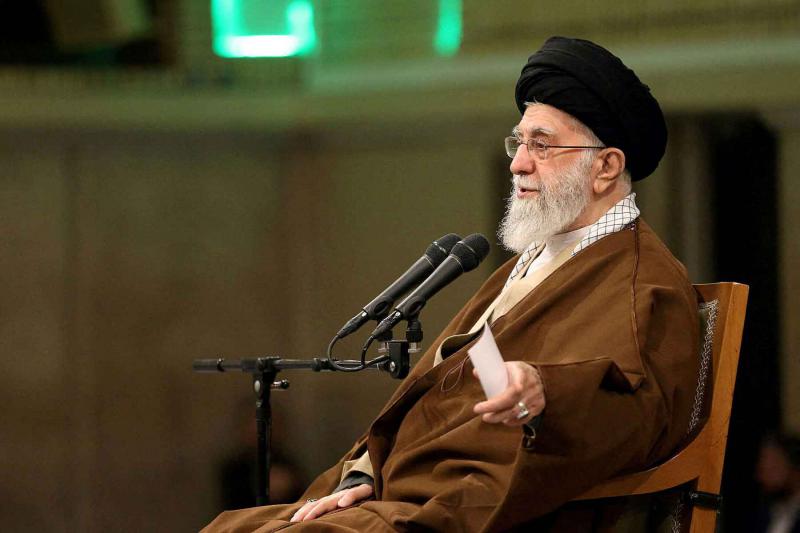
Iranian state television confirmed that Ayatollah Ali Khamenei has been killed.
“Leader and Imam of the Muslims, His Eminence Ayatollah Seyyed Ali Hosseini Khamenei, on the path of upholding the exaltation of the sacred sanctuary of the Islamic Republic of Iran, drank the sweet, pure drought of martyrdom and joined the Supreme Heavenly Kingdom”, a statement shared on Iranian state media said according to Reuters, adding that the country would hold 40 days of mourning.
The confirmation came hours after US President Donald Trump had claimed that Iran’s Supreme Leader was killed, marking a dramatic escalation in rhetoric amid intensifying US and Israeli military operations inside Iran.
In a lengthy post published on his platform Truth Social, Trump declared that Khamenei was “dead” and described the moment as “the single greatest chance for the Iranian people to take back their Country.”
Trump alleged that US intelligence, working closely with Israel, had successfully tracked Iranian leadership figures and suggested that heavy bombing would continue throughout the week or as long as necessary.
Earlier in the day, Iran’s Foreign Ministry spokesperson Esmail Baghaei told ABC News that both Supreme Leader Khamenei and Iranian President Masoud Pezeshkian were “safe and sound.”
Seyyed Mehrdad Seyyed Mahdi, head of public relations at the Office of the Supreme Leader, had initially described the reports as psychological warfare, according to Iran’s semi-official ISNA news agency.
The Israel Defense Forces also said it had “eliminated” what it described as the Iranian regime’s defence leadership in its opening wave of attacks. In a social media statement, the IDF claimed that Ali Shamkhani, a senior security adviser, Mohammad Pakpour, commander of the Islamic Revolutionary Guard Corps, and Aziz Nasirzadeh, Iran’s minister of defence, were among those killed. Iran has not confirmed these claims. Iranian media later confirmed their deaths, including among those killed chief of the staff of the Armed Forces, Abdul Rahim Mousavi.
Who is Ayatollah Ali Khamenei
Ayatollah Ali Khamenei has served as Iran’s Supreme Leader since 1989, following the death of Ayatollah Ruhollah Khomeini, who led the 1979 Islamic Revolution.
As Supreme Leader, Khamenei is Iran’s highest political and religious authority, holding ultimate control over the armed forces, judiciary, state broadcasting apparatus and key strategic decisions. He appoints senior military commanders and wields significant influence over foreign policy, security matters and Iran’s nuclear programme.
Unlike Iran’s elected president, the Supreme Leader is not chosen through direct public vote but is appointed by the Assembly of Experts, a body of clerics. The position stands above the executive and legislative branches of government.
If confirmed, Khamenei’s death would represent one of the most consequential political developments in the modern history of Iran and the region. It could trigger a power struggle within Iran’s political and security institutions, particularly within the Islamic Revolutionary Guard Corps, which plays a central role in the country’s governance and regional posture.
Notably, countries in the region are concerned that instability in Iran will spill into the wider region, with hopes earlier in the week that diplomacy could avoid the latest conflict.



Comments (0)