

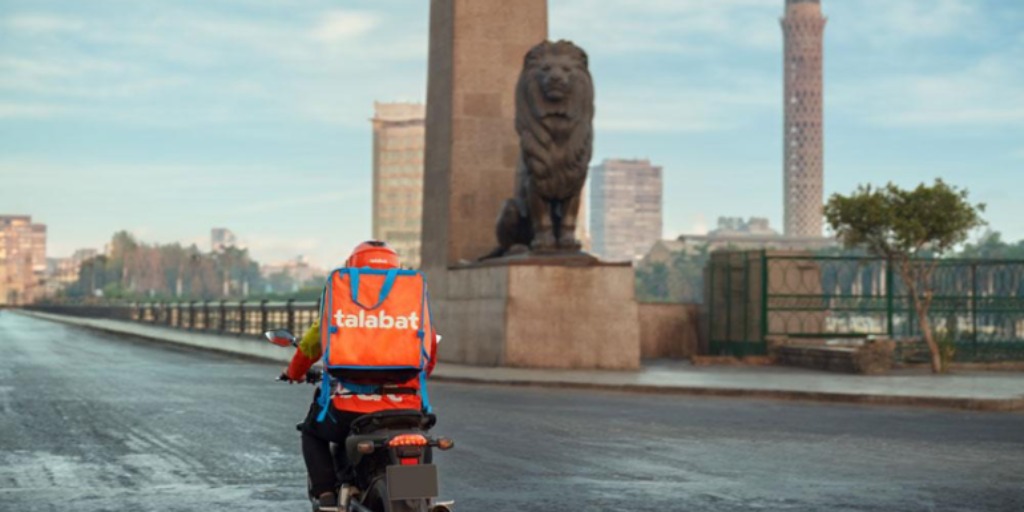
On Talabat, one of the Middle East’s largest food and grocery delivery platforms, customers can now pay extra to have their order arrive faster. At malls and restaurant districts across Cairo, valet parking has become a routine expense. And, in open air venues like The Drive, entire food and beverage hubs are designed around the idea that customers should not have to leave their cars.
These services signal a shift taking place across Cairo, where convenience is increasingly becoming a perk people are willing to pay for.
Part of the reason is the sheer scale of Greater Cairo itself. According to a 2024 Organisation for Economic Co-operation and Development (OECD) report, Greater Cairo is home to around 23 million people, accounting for nearly a quarter of Egypt’s population and making it one of the world’s largest metropolitan areas.
A drive from New Cairo to Sheikh Zayed can take well over an hour on a normal day and close to two hours during rush hour. Add the challenge of finding parking, navigating crowded commercial areas, or running multiple errands in the summer heat, and even simple tasks can become time-consuming. Increasingly, many Cairenes are choosing to pay to avoid that effort.
Traffic remains one of the most visible frustrations. According to traffic analytics company TomTom, Cairo ranked among the world’s most congested cities in 2024, with drivers spending hundreds of hours each year delayed by traffic. For many residents, the issue is not only the commute to work but also the cumulative time spent on everyday activities such as grocery shopping, picking up prescriptions, or collecting takeaway meals.
Online discussions about commuting in Cairo often reflect similar frustrations. In one Reddit thread, a visitor thanked Egyptians for their hospitality before describing the city’s traffic as “just sheer madness.” Another commenter remarked that in Cairo, “there is no rush hour. It’s just a 24/7/365 constant car flood.” While anecdotal, such comments illustrate how residents and visitors alike experience the city’s congestion as a constant part of daily life.
That reality has helped fuel demand for services designed to save time. Food delivery platforms, ride-hailing apps, valet parking services, and drive-thru concepts all offer ways to reduce the friction of daily life.
The growing popularity of delivery and on-demand services suggests that convenience is becoming a significant factor in consumer decision-making. According to Statista, Egypt’s online food delivery market continues to expand as consumers seek quick meal solutions and a wider range of dining options through mobile apps. The trend is particularly pronounced among younger consumers, whose increasingly busy lifestyles have contributed to rising demand for convenience.
Research by PwC indicates that convenience-driven consumption is especially widespread in Egypt. Nearly half of Egyptian consumers use on-demand delivery platforms, compared with 28 percent globally. Additionally, 23 percent of Egyptian consumers place orders weekly, almost double the global average of 12 percent. The figures suggest that paying extra for convenience is no longer an occasional indulgence but an increasingly common habit.
The trend is visible across different aspects of daily life. Places such as The Drive, a food and beverage hub where every restaurant and coffee shop offers a drive-thru option alongside traditional seating, are built around convenience. Customers can pick up meals, coffee, or snacks without leaving their cars, turning speed and accessibility into part of the experience itself.
Parking has become another example of convenience becoming something people increasingly pay for. In many malls, commercial areas, and restaurant districts, valet services are now a standard feature rather than a luxury reserved for high-end venues. Depending on the location, valet can save drivers the time and frustration of searching for parking, particularly in crowded areas where spaces are limited.
Transportation reflects a similar trend.
“If I’m going to Downtown or Zamalek on a weekend, I usually leave my car at home,” said Jana Hisham, 30, a Cairo resident. “The parking situation alone can ruin the outing. I’d rather pay for an Uber than spend 30 minutes driving around looking for a spot.”
Ride-hailing platforms such as Uber and Careem have become a staple of urban life, offering more than just an alternative to traditional taxis. Users can choose from a range of service options, paying extra for perks such as faster pickups, newer cars, or a smoother and more comfortable ride, reflecting a broader willingness to spend money in exchange for saving time and reducing everyday hassles.
Looking for comfort, even shopping habits have adapted. Many supermarket chains now offer same-day delivery through their own platforms or third-party apps. Instead of carrying heavy grocery bags, navigating crowded aisles, or setting aside time for a shopping trip, customers can have everything delivered directly to their doorstep. What was once considered an occasional convenience has increasingly become an expected option.
At the same time, not everyone can afford these conveniences. Egypt’s minimum monthly wage is scheduled to rise to EGP 8,000 (USD 147.25) next month, but the cost of convenience can still represent a meaningful expense for many households.
A single Uber ride from New Cairo to Heliopolis can cost up to EGP 250 (USD 4.83), while valet parking fees often range between EGP 50 and EGP 200. Food delivery platforms frequently offer faster or prioritized delivery options for an additional fee, and those charges can add up quickly when used regularly. What has become routine for some Cairenes remains an occasional luxury for others.
Yet the growing popularity of convenience-focused services suggests that for a significant segment of the population, saving time has become worth the additional cost.
As businesses compete for customers, many are no longer simply selling products or services. They are selling ease, speed, and the ability to avoid everyday frustrations. In modern Cairo, convenience is increasingly becoming a product in its own right, and one that is shaping how people experience the city.





Comments (0)