


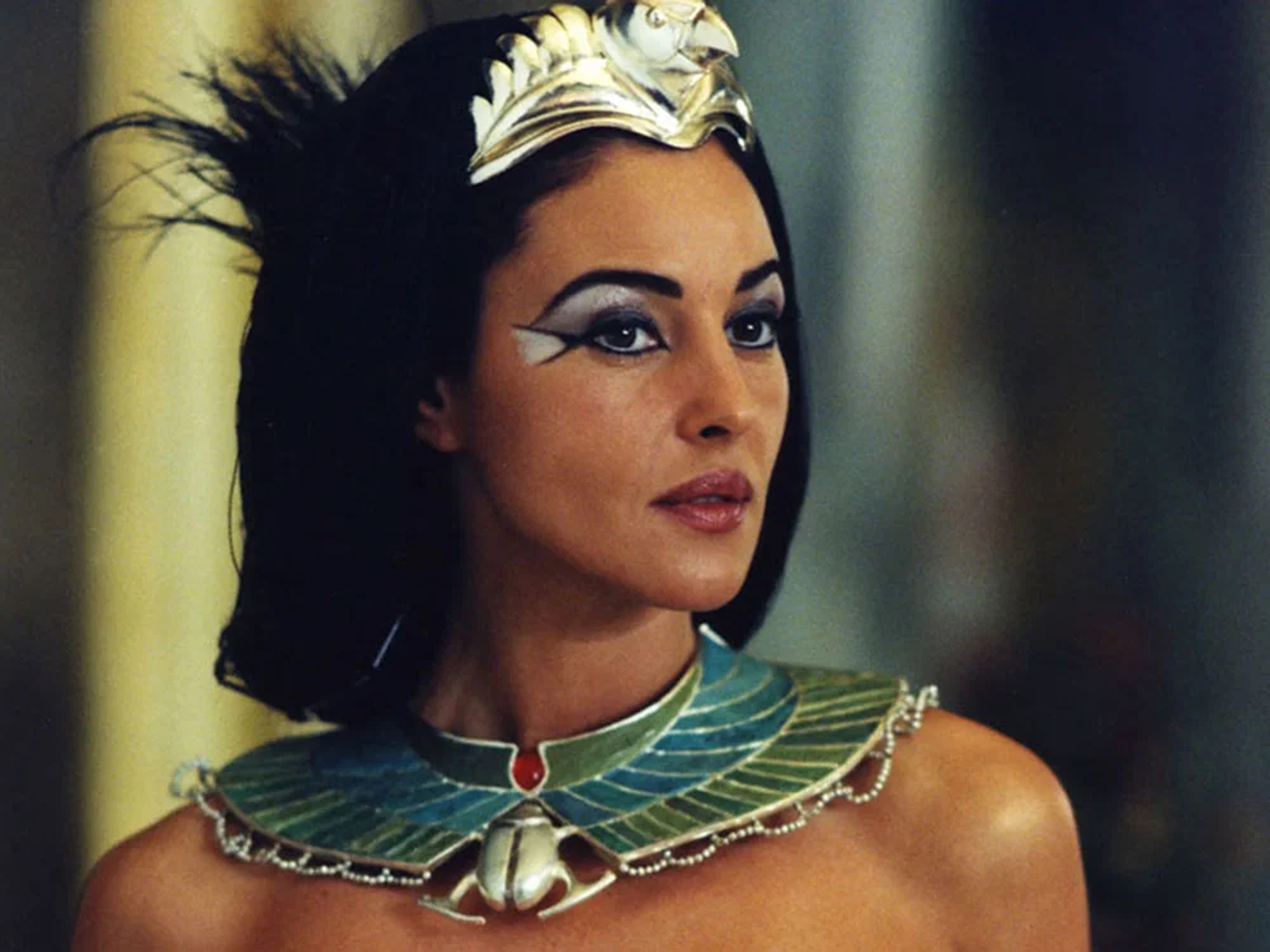
Some fashion photographs are taken in studios, against clean backgrounds, with carefully chosen poses and glances, like how a single raised eyebrow can change the whole image.
But some of the most iconic fashion photos are the ones that feel natural; the ones that give a glimpse behind the scenes, much like how English supermodels Kate Moss and Naomi Campbell were often photographed simply walking down the street.
Those spontaneous street shots often outshone even the most polished magazine covers, and are credited with ushering in a new era of fashion photography, where the camera is not just focused on the model’s face, but follows them like a film director, capturing them wherever they are: on the street, in a car, or in the dressing room as they apply makeup and get dressed.
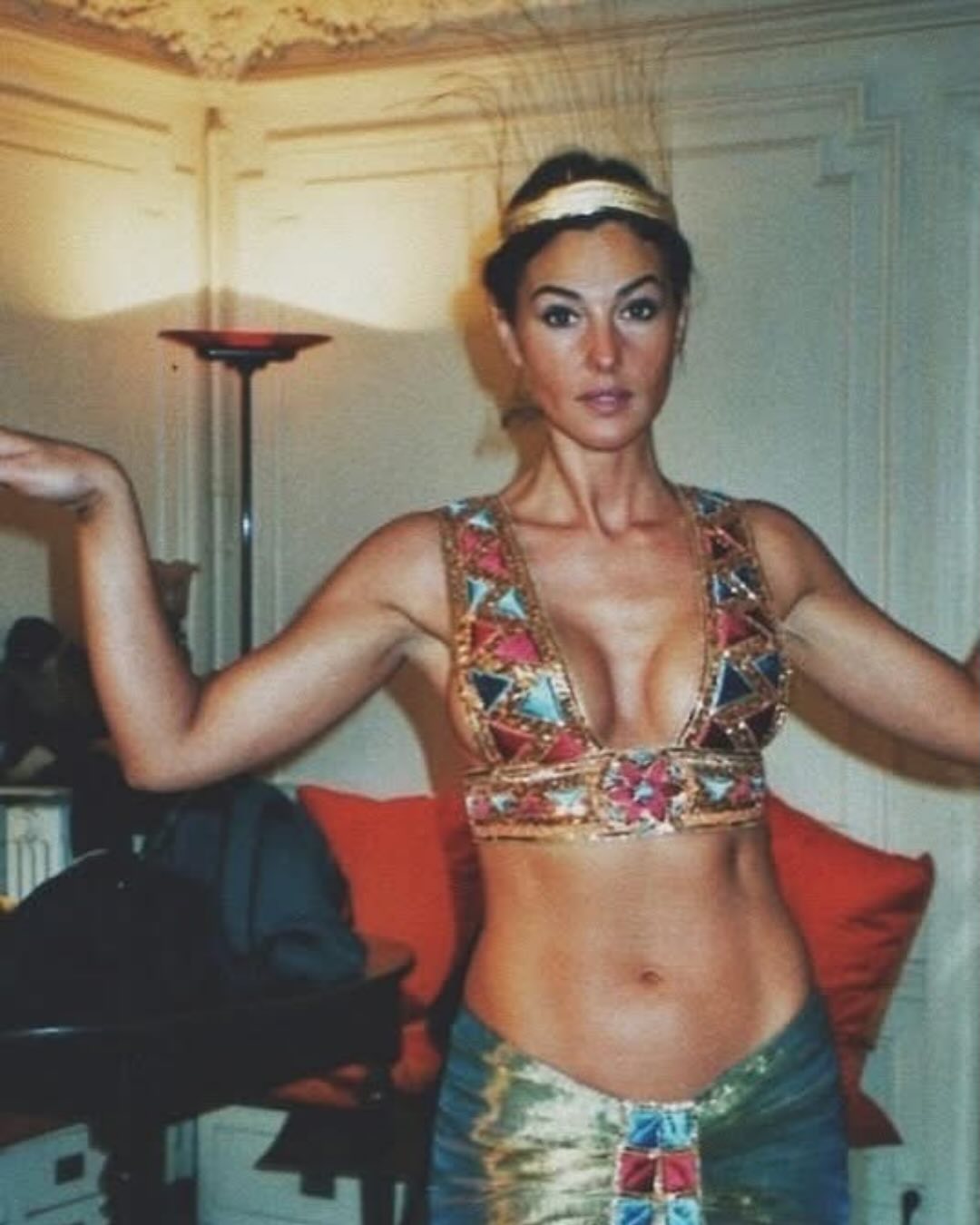
A perfect example of this kind of fashion moment is when Italian actress Monica Bellucci was photographed testing her Cleopatra costume for the French film Asterix & Obelix: Mission Cleopatra (2002).
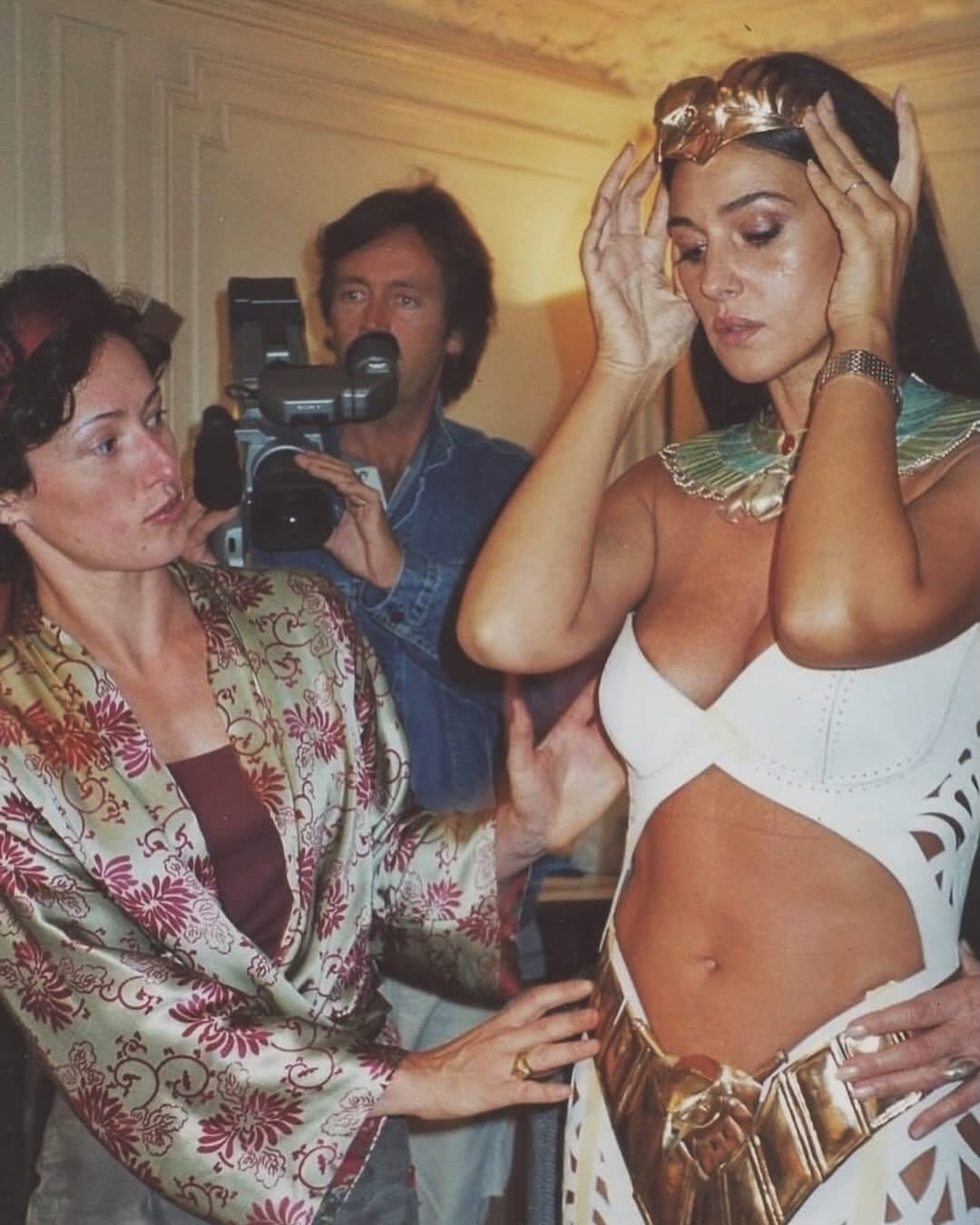
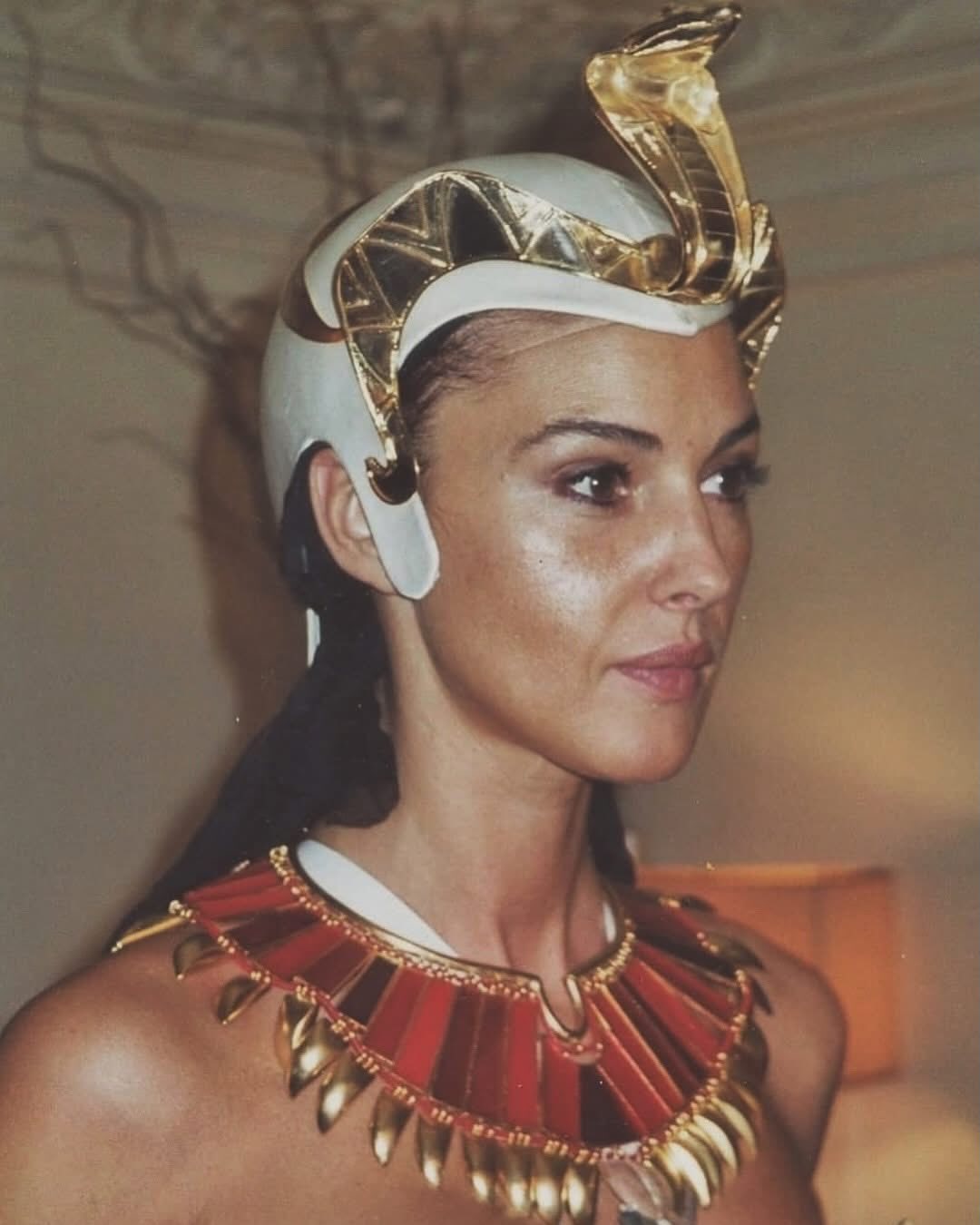
Without makeup or styled hair, Bellucci appears in her most natural state, wearing the intricate costumes designed by French designer Phillip Guillotel and Italian designer Tanino Liberatore.
In the photographs, every detail was carefully observed and considered, from ensuring the costume not only fit but also moved with her body. We see the raw moments where the conceptual design transforms into a wearable garment, and how the people around her are all focused on ensuring the vision translates to the screen.
Costume fittings are incredibly intimate and long. They require the star or the model to stand still while multiple team members measure, pin, and adjust garments that will define her character. What comes through in these photos is exactly that: a bustling, collaborative environment that speaks to the strong trust between the icon and her wardrobe team.
In one notable photo, Bellucci wears a white, two-piece cutout costume with a striking gold belt and arm cuffs, arranged to flatter her figure while giving Cleopatra’s attire a more wearable, fashion-forward edge.
Another photo shows a close-up of the garment’s exquisite details, featuring a layered red and gold broad collar (usekh necklace from ancient Egypt worn by deities) and a white-and-gold crown with the Uraeus, the sacred cobra, a symbol of royalty in ancient Egypt.
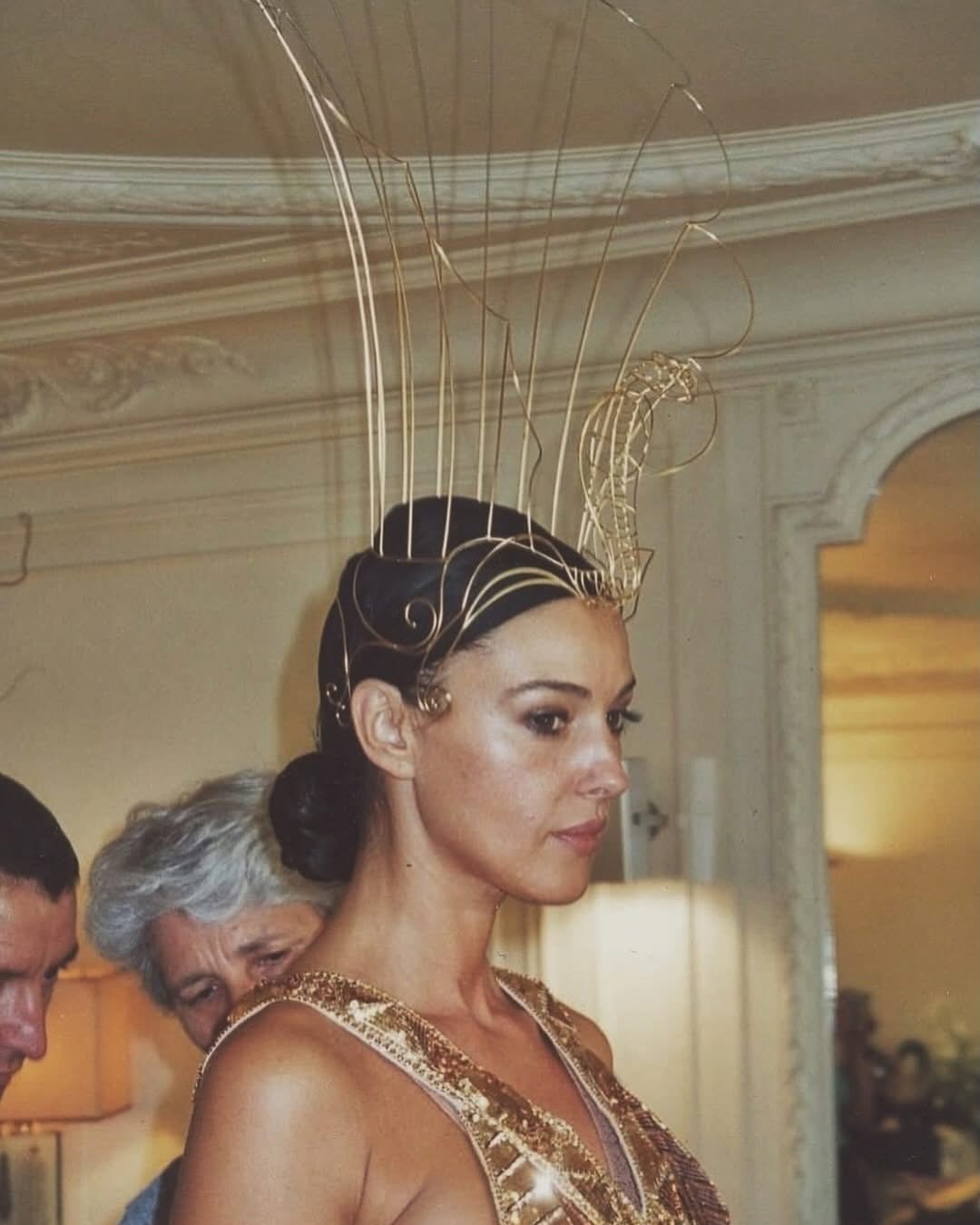
There is also a side-profile shot of Bellucci wearing an intricately beaded gold dress and a towering golden wire headdress, showcasing the sheer artistry involved. A piece like this demands a precisely fitted base, and its weight and balance would take significant time to adjust.
Bellucci’s costume, a blend of ancient Egyptian dress and haute couture fantasy, now echoes through the creations of contemporary Egyptian designers like Mai Galal, one of the country’s most celebrated costume visionaries.
This year’s Fashion Design District (FDD), held during Cairo Design Week, showcased select gowns and jewelry pieces recently unveiled at the opening of the Grand Egyptian Museum, giving visitors a rare, intimate glimpse into wearable designs entwined with heritage.
While ancient Egyptian costumes are often reduced to Halloween outfits, Bellucci’s casual photos and Galal’s designs show that these styles can easily blend into everyday fashion. In one photo, for instance, Bellucci wears a brightly colored, heavily beaded crop top with a low-slung skirt, posing in a simple, well-lit early-2000s room.
The look feels less “Cleopatra” and more “the girl next door,” matching the film’s lighthearted tone. Similarly, Galal’s gown for Shereen Ahmed, the Egyptian Broadway actress, merges the glamour of ancient Egyptian style with the relaxed ease of modern fashion.
It has been only a little over a month since the Grand Egyptian Museum opened its doors, yet the spirit of Egypt’s history continues to exist, even in the casual and spontaneous photographs of Bellucci in her dressing room, easing into the role of Cleopatra.





Comments (0)