


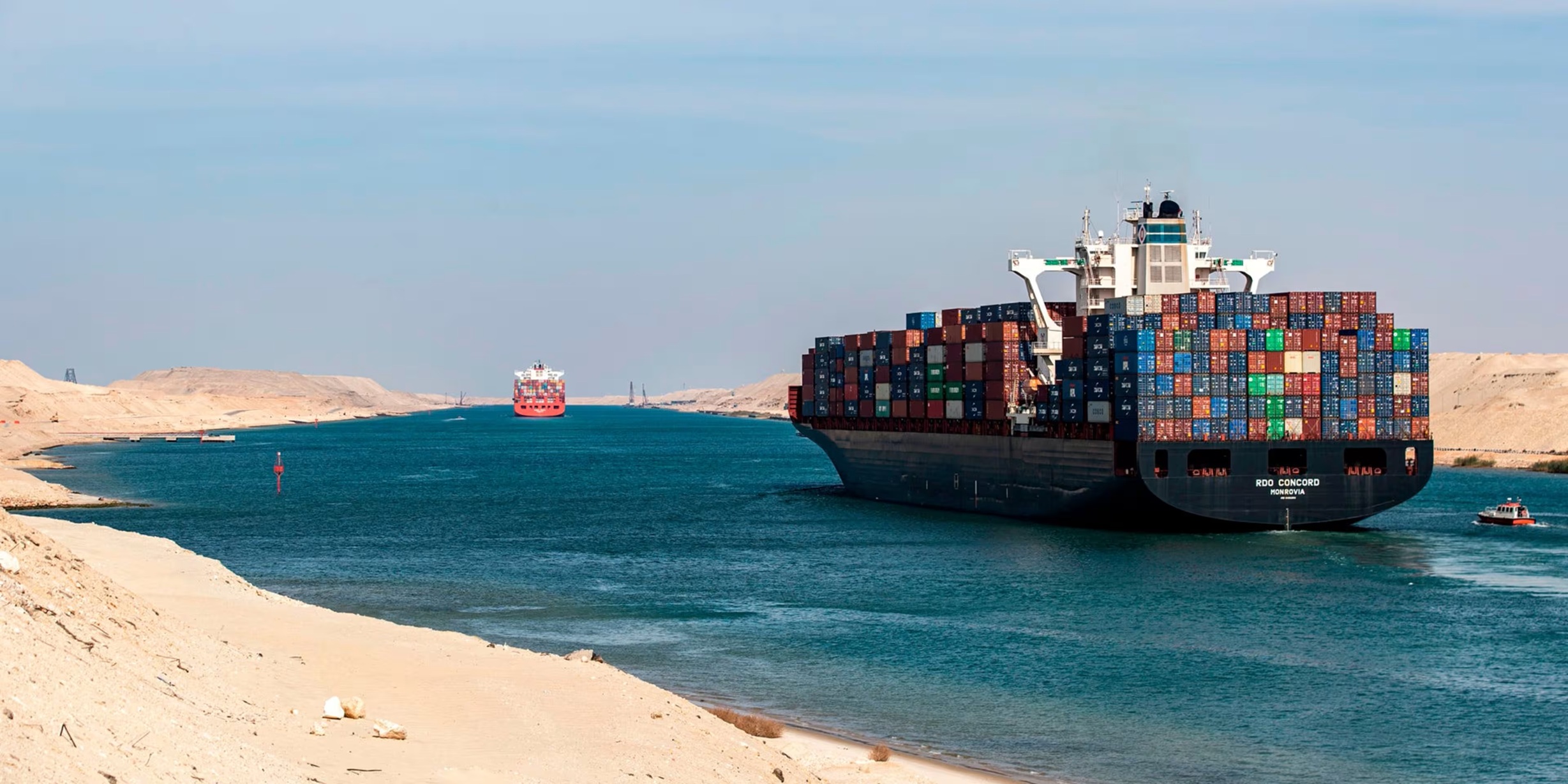
The Suez Canal revenues rose by 24.5 percent in the final quarter of 2025, alongside a 9 percent increase in vessel traffic, according to the chairman of the Suez Canal Authority (SCA), Osama Rabie, on Sunday, 8 February.
The total revenue increased from USD 880 million (EGP 41.3 billion) in the final quarter of 2024 to an estimated USD 1.1 billion (EGP 51.6 billion) in the final quarter of 2025.
Dollar-denominated transfers also climbed by 24.2 percent during the period, signaling a gradual recovery in global shipping and renewed confidence in one of the world’s most critical maritime corridors.
The upward trend continued into early 2026, Rabie stated. From the first of January through 7 February, the number of transiting vessels increased by 5.8 percent compared with the same period a year earlier, while dollar revenues rose by 22 percent.
Additionally, SCA reported an 18.5 percent increase in revenues during the first half of fiscal year 2025/2026, as shipping traffic gradually returned amid improving security conditions in the Red Sea.
He attributed the gains to a combination of marketing initiatives and technical measures aimed at restoring transit volumes after months of disruption.
Speaking at the 15th International Maritime Transport and Logistics Conference, Marlog 15, on 8 February, held in Alexandria, Rabie said the canal had demonstrated resilience amid global geopolitical tensions, including instability in the Red Sea and disruptions to international supply chains.
He described the waterway as a pillar of maritime stability, noting that the authority had taken a proactive approach to managing the fallout from regional crises and attacks on shipping, while working to safeguard navigation and reinforce the canal’s role in global trade.
In recent months, vessel traffic through the Suez Canal has begun to recover as major shipping companies reviewed their routing decisions after extended disruptions to key global trade passages, notably the Red Sea and Bab El-Mandab.
The SCA has also kept the waterway fully operational while strengthening safety protocols and increasing pilotage and escort services for ultra-large container vessels. Additionally, it rolled out flexible pricing and incentive measures aimed at persuading shipping lines to resume regular transits through the canal.






Comments (0)