


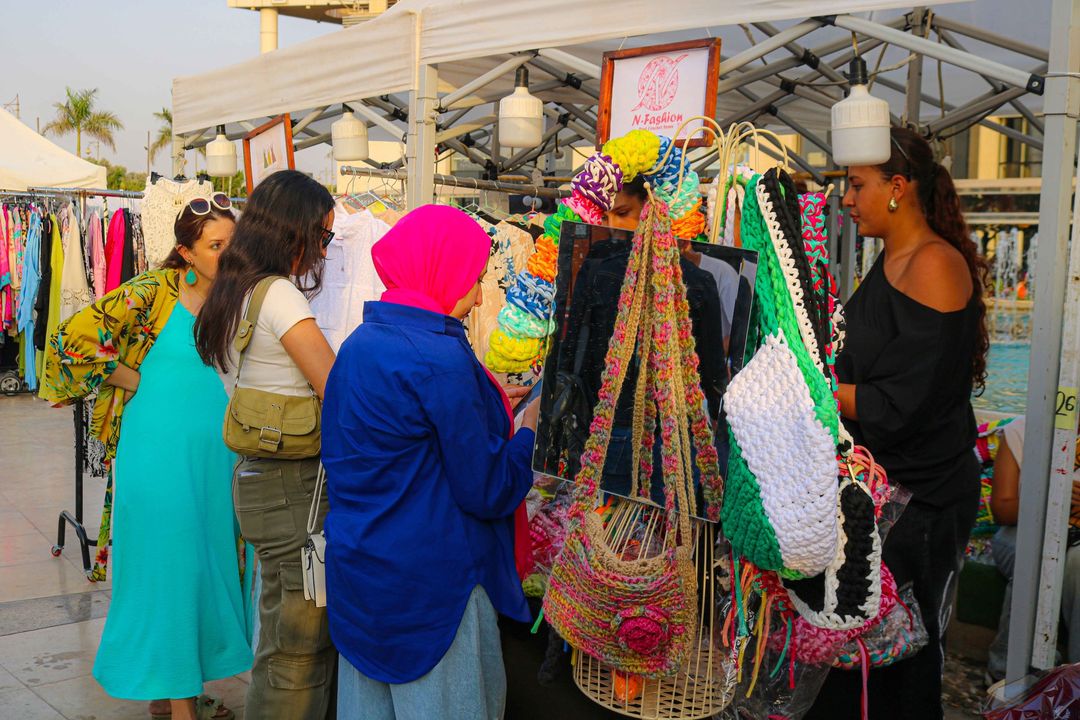
For years, an imported handbag or a bottle of Korean hair serum was the reflexive marker of status for Egyptian aspiring shoppers. Nowadays, across fashion racks, skincare shelves and TikTok feeds, Egyptians are increasingly reaching for labels made a few miles from home rather than flown in from Paris or Dubai, and the shift is remaking the country’s retail economy from the ground up.
By 2032, Egypt’s beauty and personal care market is projected to reach USD 1.57 billion (EGP 77.75 billion), up from USD 900 million (EGP 44.57 billion) in 2025. Domestic players like the skincare brand Nefertari reported a 35 percent growth in 2024 alone, and homegrown formulator Beesline is carving out an 8 to 10 percent share of the organic segment, according to Home & Personal Care Middle East & Africa magazine.
Meanwhile, the country’s e-commerce market is on track to hit USD 14.9 billion (EGP 740.2 billion) in 2028, the Egypt Ecommerce Market Opportunities Databook 2024 by Research and Markets, a global market analysis company, reports.
The price of buying foreign
The clearest driver is economic, as Egypt’s currency devaluations in recent years have made imported goods sharply more expensive, and annual urban inflation reached 24 percent in January 2025.
For example, the exchange rate has reached roughly EGP 50 to the U.S dollar, a 38 percent devaluation from about EGP 30.9 just months earlier after the Central Bank of Egypt floated the pound in March 2024.
According to Mohamed Shallal, the founder of MOCHE, a local brand of natural body care products, despite currency devaluation, the shift worked in domestic manufacturers’ favor, as customers have come to see more merit in what’s made at home.
A 2022 survey by PwC Global Consumer Insights found that 83 percent of Egyptian, Saudi and Emirati people are willing to pay more for products made or sourced locally.
Leaning further into the fact that ‘local’ became a value proposition, the Egyptian government framed import substitution as a pillar of its broader growth plan, which forecasts an economic expansion of 5.4 percent in fiscal year 2026/27.
Storefronts follow the feed
The second force pushing local brands forward is digital accessibility.
Egyptian local brands can launch a business through social media platforms, creating their storefronts on Instagram or TikTok, register and pay taxes to Egypt’s tax authority if their earnings exceed EGP 500,000 (USD 10,075) a year, long before founders can afford the high operation costs of rent and employees.
PwC’s 2024 Voice of the Consumer survey found that 46 percent of Egyptian consumers now shop online weekly via mobile phones. Additionally, social commerce, which is purchasing an item directly in a social media application such as TikTok or Instagram, without ever leaving the app, has become a primary discovery channel for fashion and beauty alike.
A decade ago, building a clothing or cosmetics brand required capital for storefronts and imported inventory. Today, a founder can launch with a smartphone and an online following.
Niche labels in fragrance such as Bubbelz, modest fashion like Rizq and Hayaa fashion, or natural skincare brands such as Areej Aromatherapy and Raw African, now compete directly with multinational giants in value, pricing, and digital presence.
Physical retail, on the other hand, has had to catch up to the trend rather than lead it.
In Cairo, a concept store called Locally began as a basement operation curating dozens of homegrown fashion and accessory labels under one roof, giving small designers a legitimacy that scattered online listings could not.
“The amount of people who were exposed to local brands because of us was insane,” its co-founder, Mohannad Saleh, told Egyptian Streets. Since it opened, he added, “concept stores with a similar model have popped up across the country.”
Buying local as a statement
The third force driving the boom in local brands is more emotional than economic, as an instinct to treat consumption as political expression rises.
When Zara released a 2024 campaign that critics said evoked scenes of destruction in Gaza, the backlash accelerated a broader turn toward Egyptian alternatives, as shoppers folded support for the Palestinian cause into their purchasing decisions.
Spurred by the boycott movement against companies that support Israel, local variants have popped up. While in the past, for example, people would easily search for La Roche-Posay sunscreen, they now opt for local brands like Bobai, Shaan, and other options.
Regional analysts have separately noted that wealthy Arab consumers are growing “more exploratory” in their shopping habits, according to a 2023 Vogue Business article, opening space for niche and emerging labels that once struggled against global luxury names. The new habit is expanding globally too, with Asians favoring local brands due to their accessibility and innovation and Europeans turning local due to proximity, sustainability, and supporting the community.
Founders are already looking past Egypt’s borders. Salma Elkhamisy, who founded the fragrance label Nuit, said the domestic market is “hungry” for homegrown scent brands, and described plans to expand regionally, starting with the United Arab Emirates.
None of the three forces would likely have produced this boom alone, but together, they have turned “Made in Egypt” from a hedge against high prices into something closer to a badge, reshaping a retail landscape long dominated by imported names.


Comments (0)