


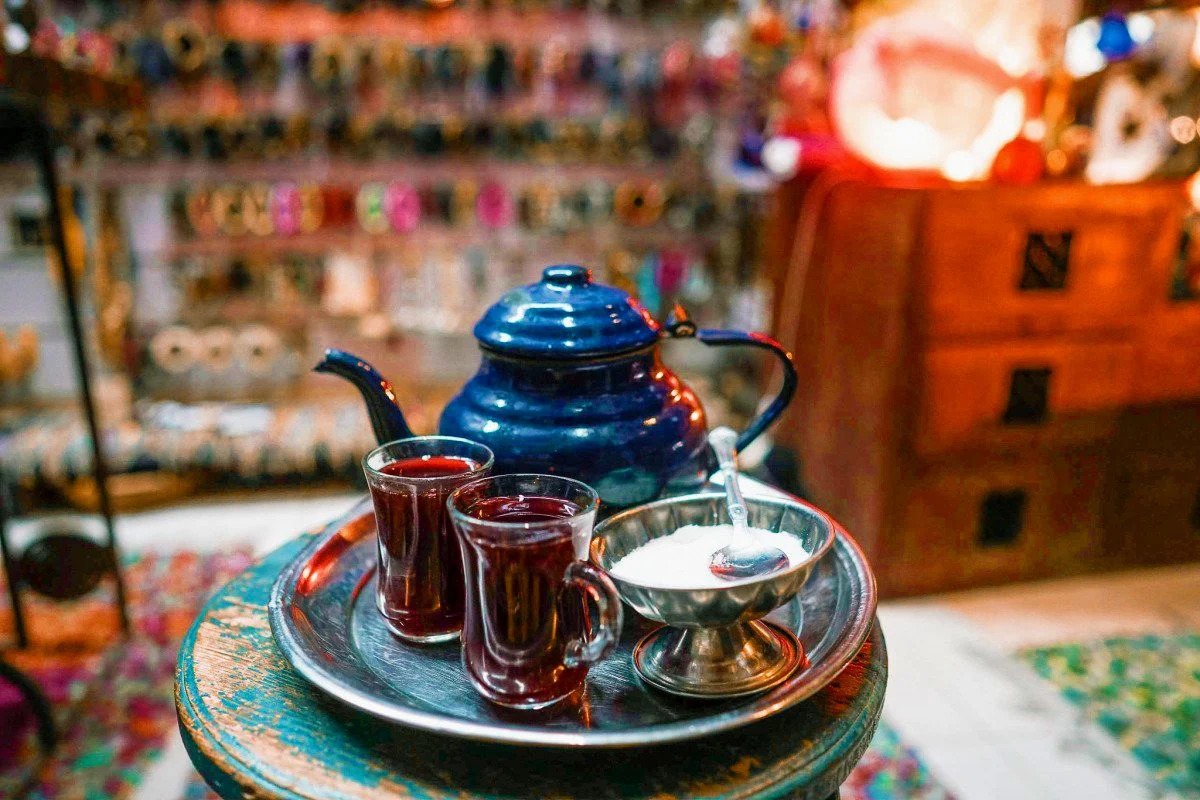
Peace. It is the final word that Egyptian poet Salah Jahin uses in his poem, El Shay Bel Laban (Tea with Milk, 1955), which was published in his first poetry collection Kalimat Salam (A Word of Peace, 1955).
Sitting at the breakfast table in the gentle hours of the morning, the poem describes the scene of two lovers meditating on the slow ritual of drinking tea with milk together. They feel and drink the feeling of peace; the feeling of taking a deep exhale after sipping one’s favorite drink and finally feeling, if only for a brief, fleeting moment, that maybe this is peace. Maybe this is peace now, even if it will not remain so peaceful for long.
Born in Shobra, Cairo, in 1930, and witnessing the political developments and upheavals that led to the 1952 Revolution and Egypt’s independence, Jahin’s lifetime was marked by turbulence, and peace was never a word that could simply be written onto a page with ease or carelessness.
Writing the word ‘peace’ in a poem would have felt far too simple for a reality that was anything but.
Yet for Jahin, there was more to peace than merely the absence of war or instability. There was more to it than a distant dream or an impossible ideal, attainable only in a world where everything is as it should be.
In Jahin’s words, there exists a kind of peace that comes alive and begins to breathe when two human beings, and two hearts, meet one another with love and compassion. In the poem, peace is born and reborn through the small moments of gentleness that one person generously offers another.
Even if those moments fade, they have the capacity to be born again, returning whenever love finds its way back into a person’s heart.
Love is peace. Compassion is peace. Gentleness is peace. Each of these qualities, on its own, has the power to create small, simple moments of peace. They may not be enough to quiet the chaos of the world around us, but they can still shape an inner world where peace exists, much like the quiet world shared between two lovers.
The inner world shared between the two lovers, where they drink tea with milk in harmony and in unison, is the very same world that exists within the walls of their bedroom. They do not have to be making love to prove that they are in love. Instead, it is in their existence together, in the way they move through the ordinary moments of daily life, that love reveals itself.
Drinking tea with milk together becomes an act of love in itself, and within that love, they find a sense of pure peace.
As the Egyptian poet Ahmed Hegazy observes in his article on Jahin’s poetry, “the poet is not speaking here about two people simply eating breakfast… He is speaking about a world in which the bride and groom have become a single human being.”
A world in which the bride and groom become one is, ultimately, a world that can be distilled into a single word: peace. As Hegazy writes, “It becomes a single word, just as it began. A word of peace.”
The emotional impact of the poem lies in what is left unsaid rather than in what is spoken. It is found in the actions themselves rather than in any proclamation, just as love and peace are experienced not through words, but through the acts that give them meaning.
It is felt through the breakfast table, the tea with milk, the marriage furniture, and the two wedding rings. Each object exists in its own right, yet together they create a visual and sensory portrait of the two lovers.
Jahin completely avoids ornate vocabulary or elaborate metaphors. The poem reads almost like a list of observations, but these simple observations and small movements accumulate gradually, building emotion one by one. The climax, in the end, is a single word: peace.
The opinions and ideas expressed in this article are the author’s. To submit an opinion article, please email [email protected].






Comments (0)