


In the Egyptian national team’s dressing room, the players are celebrating. Shirts are strewn across the floor, accompanying shoes, socks, and golden confetti still hanging in the air. Quickly, the camera pans toward a bin, in which, sitting amongst various items of rubbish, is the FIFA World Cup trophy.
Hit by a used water bottle chucked unceremoniously into the bin, the trophy foregrounds the appearance of the word toz, written in Arabic. Meaning ‘whatever’, or ‘who cares’, the word exemplifies the way in which Egyptian fans have transformed feelings of injustice into a celebration, a rejection of the World Cup’s absurdity.
The absurdity, according to fans, was writ large in Egypt’s last game against Argentina. After suffering a 3-2 loss to the South American side on 7 July, widespread accusations of injustice spread rapidly, in Egypt and internationally.
In an emotional post-match interview, the Egyptian footballer Mostafa Ziko explained, “we were wronged today, everyone saw it”. In Britain, former England player Alan Shearer agreed, saying, “I think it’s utter and complete b******”.
Both were referring to the disallowing of Egypt’s spectacular goal in the 58th minute following VAR review, in addition to several further incidents, including the denial of a possible Egyptian penalty just before Argentina’s stoppage-time winner.
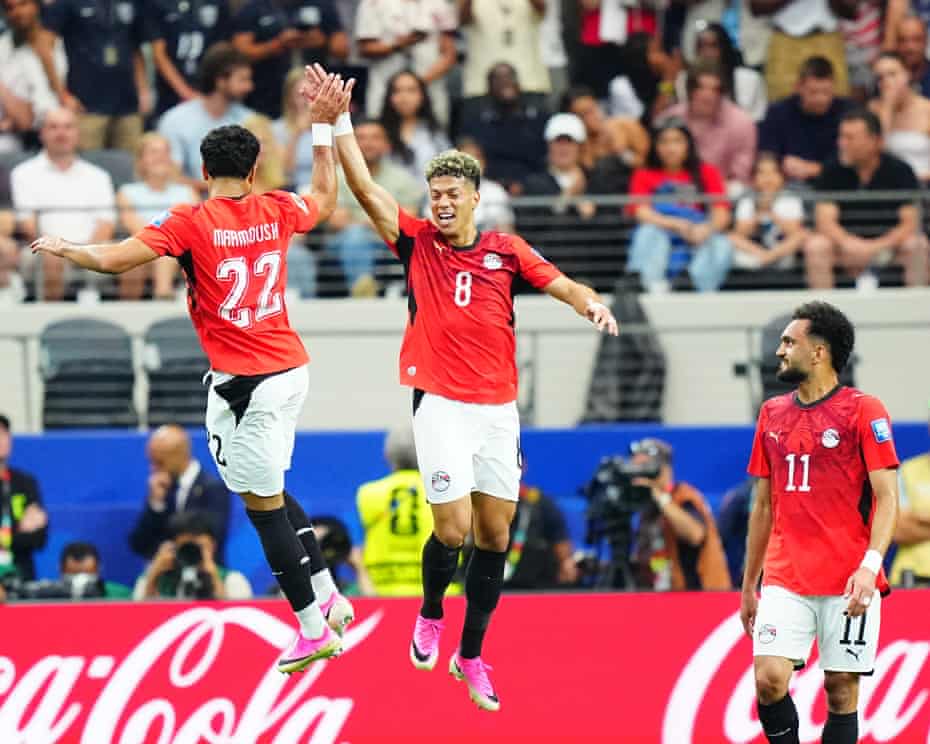
After defeating Australia 4-2 in a penalty shootout in the Round of 32 on 3 July, making the Round of 16, the Egyptian National team progressed further in the World Cup 2026 than ever before.
Before this World Cup, Egypt had never won a single match, or progressed past the initial group stages in 1934, 1990, and 2018. Prior to their victory over Australia, the Pharaohs had tied Iran and Belgium 1-1, and had defeated New Zealand 3-1.
Each victory had been followed by ecstatic celebration. Fans partying in the streets paralysed major Egyptian cities, while thousands flocked to fan zones in support of their team’s historic campaign.
Initially posted on Instagram a day after Egypt’s game against Argentina by Egyptian creator Danny Arafa, the toz short video now sits on 9.2 million views, with over 460,000 likes. An English version of the same video has amassed over one million views.
In the second half of the video, small polaroids of different players holding various fictional awards appear in succession. Marwan Attia wins the ‘Dynamo’ award, Ziko the ‘Striker’s Revolve’, and keeper Mostafa Shobeir the ‘High Dam’ award.
The video’s caption reads: “We couldn’t care less about FIFA and their calls.”
Despite the result, the deep pride in the Egyptian team’s efforts that saturates the video is expressed again at the end, with the words “you held our heads high”. In the English video, “you made us proud”.
In a testament to the video’s success, Arafa has since produced a sticker and poster of the World Cup trophy, the word toz squeezed between the trophy and the rubbish on which it sits in the bin.
Sold online via Madd, all proceeds made from the poster and sticker are donated to Palestinian charities, a reference to the Egyptian team’s continued calls for solidarity with Palestine throughout the tournament.
The overwhelming feeling of pride and joy felt by Egyptian fans, despite the tournament’s outcome, was made even clearer at El Alamein International Airport on 10 July .
After crowds gathered to welcome the Pharaohs and watch the team’s open-top bus parade through the streets of New Al Alamein City, on arrival in Cairo, the Egyptian team were formally hosted by President Abdel Fattah El-Sisi.
“It was an incredible effort,” President El-Sisi said in an address to the squad, adding “you made us truly proud.” More adulation followed, culminating in a dazzling celebration of the team’s success at Cairo International Stadium on 13 July.
With blood red fireworks illuminating the night sky, thousands of fans gathered to honour the Pharaohs’ grand World Cup run in the packed Cairo stadium, accompanied by a performance by Egyptian singer Tamer Hosny.
The 2026 World Cup’s surreal nature was apparent throughout the tournament. Before a minute of football had been played, early controversy surrounded the rejection of the Iranian national team’s visas.
The controversy continued. In perhaps the most absurd moment of the tournament, American president Donald Trump managed to successfully lobby FIFA to overturn a red card imposed on U.S. footballer Folarin Balogun.
FIFA may remember Egypt’s tournament as a Round of 16 exit. Egyptians appear determined to remember something else entirely; a team that made history, and united a country. The World Cup trophy could stay in the bin. The Pharaohs had already claimed something far more valuable. They’d won Egypt’s pride.
As for the rest of the World Cup – toz.


Comments (0)