


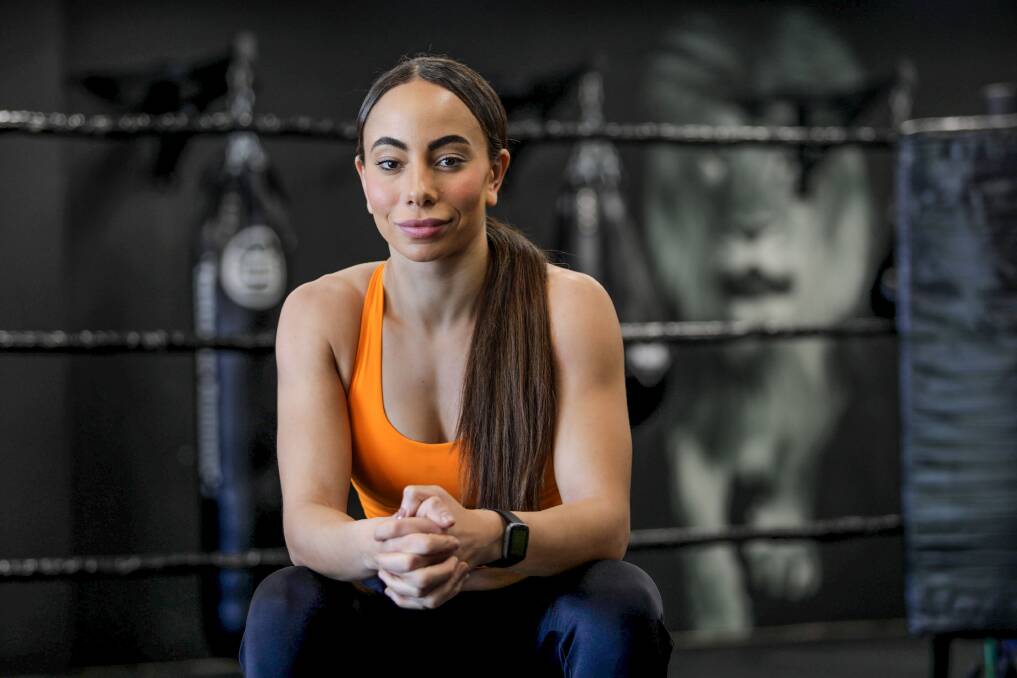
For Egyptian-Australian boxer Mai Soliman, her Super Flyweight world title bout against Japanese champion Mizuki Hiruta at the Pyramids of Giza was not defined by the final result.
Rather than dwelling on defeat, Soliman drew inspiration from the experience, using it as fuel to aim higher and keep moving forward on her journey.
“I’m often my own toughest critic, and that’s something everyone in my family knows,” Soliman tells Egyptian Streets.
“But I’ve learned to focus on the positives, take away the lessons from every experience, and move forward. What matters most is making sure I genuinely learn from it and grow.”
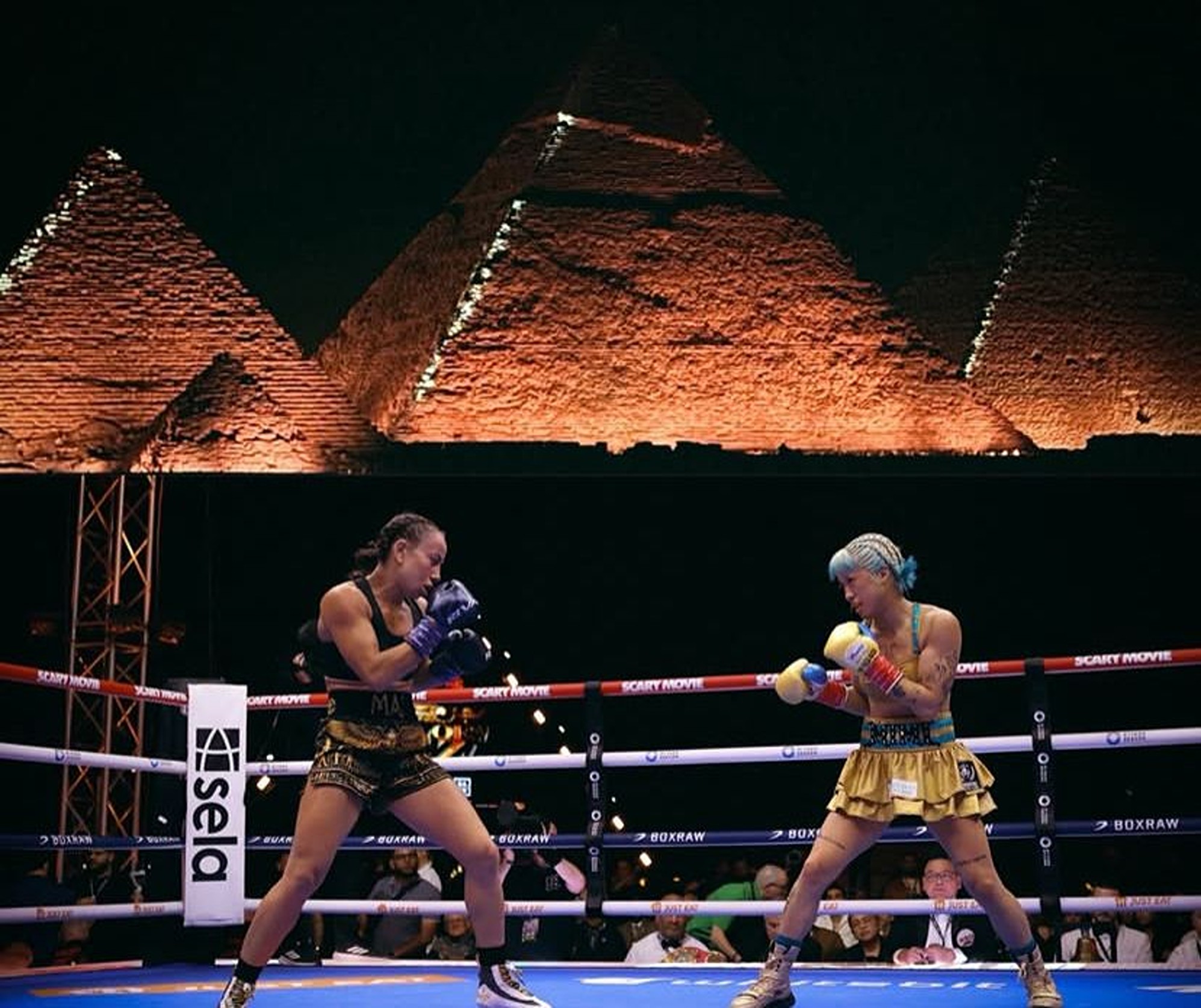
Beyond the historic milestone of becoming the first Egyptian-Australian woman to challenge for a world title at the Pyramids and the hard-earned prestige of her international championship titles, Soliman has come to realize that a boxer’s real strength is not defined solely by the ropes of the ring, but by how they keep pushing forward.
With the grit and determination of a true competitor, she shares that she aims to become a world champion. Her goal is not just to keep going, to simply train for the next match, or even to wait for the next opportunity, but rather to excel.
“I truly, deeply believe that becoming world champion is within my reach; it is not far off at all,” she says.
“The best is yet to come. I am so grateful to God, because I know that without Him, I never would have reached this point in my career.”
Heart of a Fighter
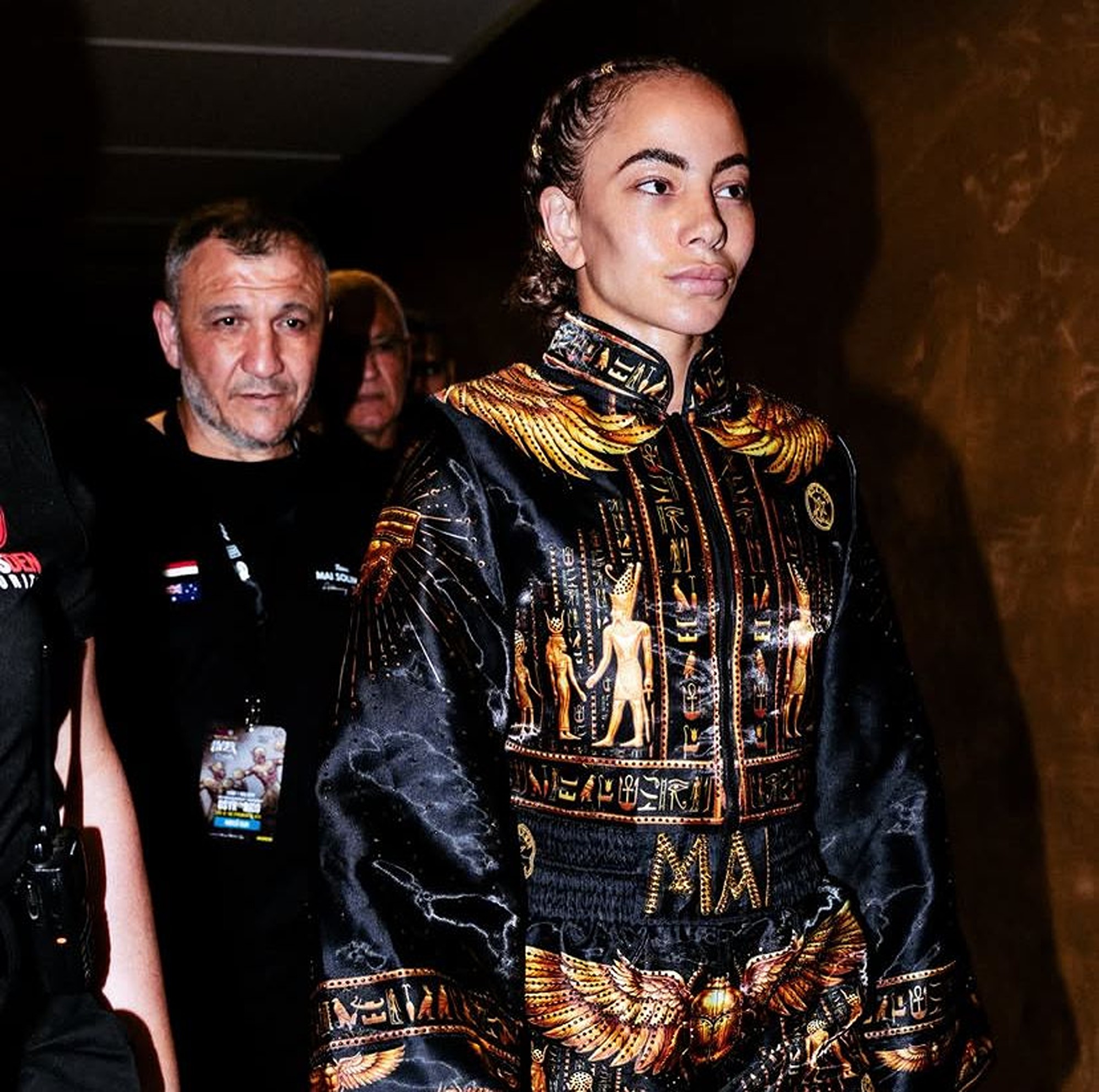
So much of Soliman’s boxing journey can be summed up in one simple sentence: she has the spirit to keep fighting and persevere, even as a female athlete competing in a male-dominated industry.
She learned very early on that boxing was never about skill alone, but about the mindset one must build to maintain discipline in such a tough environment. After watching Million Dollar Baby (2004), a film that follows the journey of Margaret “Maggie” Fitzgerald as she becomes a professional boxer, Soliman found herself inspired not just by the practice of boxing, but by the spirit of the fight itself, a spirit defined by defying the odds and refusing to succumb to defeat.
“When I watched Million Dollar Baby, I was more inspired by how determined she was to make it. She came from a humble background, but she wanted to continue fighting, even though no one wanted to train her because she was a girl,” she says.
“She went on to become a world champion, made a lot of money, and tried to help her family. So, that really inspired me.”
Even though boxing is often mischaracterized as a purely physical pursuit, its impact lies in the mental fortitude it cultivates. Beyond the ring, the sport has become her teacher, instilling a level of discipline that transcends athletic competition.
The lessons learned through training have turned into tools for navigating life’s complexities, fostering a mindset that benefits one’s well-being and overall character development.
“The discipline that comes with boxing isn’t just a physical thing; I think it’s much more about the mental aspect,” Soliman says.
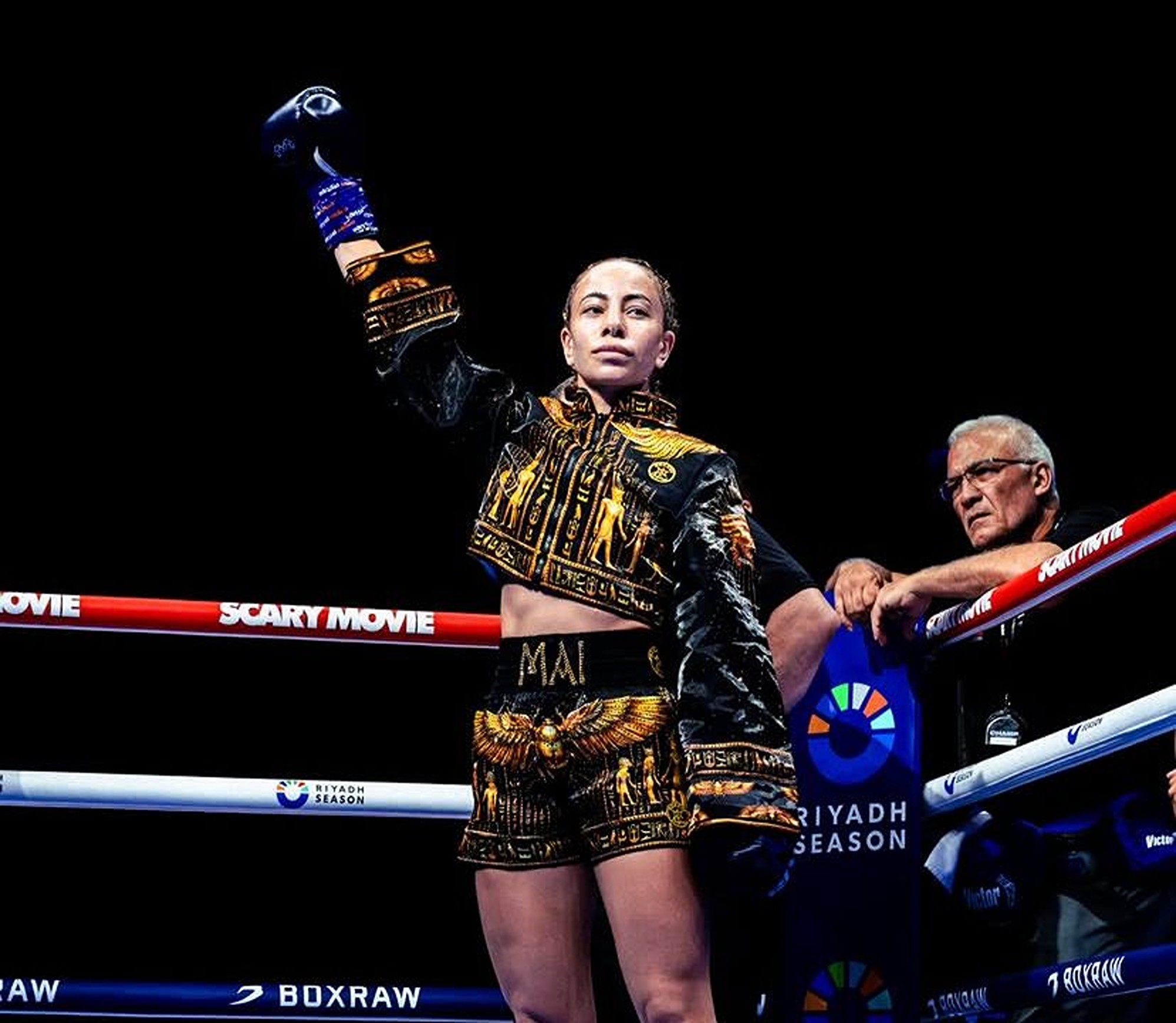
“It shapes you mentally in a completely different way, changing the very way you look at life on the outside.”
She credits these lessons for her personal evolution, noting, “Everything I’ve learned in boxing has shaped the person I am outside of the ring. It has made me responsible, disciplined, and very determined.”
“I carry those attributes with me everywhere,” she adds. “It isn’t just in my boxing life, but in everything I do, whether it’s with family, relationships, friends, or work. These lessons are part of everything I do outside of the sport.”
While the life of an athlete is often portrayed as glamorous on social media, the reality is far more grueling. For a young boxer navigating the digital age, the polished highlights seen online can be misleading, which is why her message to aspiring athletes is not to be carried away by the fame or the veneer of success.
“Boxing can look incredibly glamorous when you see it on social media, but the real goldmine is the work you don’t see off-camera,” she explains.
“That is everything you need to invest in: the fundamentals, the hard work, the sparring, and putting in the hours. It’s really that simple.”
Women in Boxing

Historically, women’s boxing has faced many obstacles, often constrained by deep-seated stigmas and narrow stereotypes. It was often viewed as the exclusive domain of men, and female boxers were frequently met with skepticism or outright resistance.
A common, reductive stereotype persists that depicts female boxers as inherently aggressive or unfeminine, suggesting that to be a fighter, one must adopt a “hard” or tomboyish persona in all aspects of life.
However, this outdated stereotype is being dismantled by a new generation of athletes who, like Soliman, prove that being a female boxer does not mean sacrificing one’s identity as a woman.
“I might look super aggressive, and that’s normal, right? We’re two people putting on gloves and punching each other in the face. But I try to separate myself from that outside of the sport and just be the lady I am,” she says.
She challenges the pressure for female fighters to conform to a specific look, idea, or even attitude. “I don’t want anyone to think that women’s boxing is about being aggressive or that you need to look like a tomboy,” she adds.
“You can still dress well and be feminine. That’s what I am outside of boxing. I don’t need to carry that persona with me; it stays in the ring and in training. When I’m outside, I like to get my hair done and dress well.”
Boxing has not made Soliman any less emotional; in fact, she actively fights the stereotype that female boxers must strip away their humanity to succeed. Instead of masking her feelings, she fully embraces them.
“Do I still feel emotional? I’m so emotional,” Soliman says. “I cry at probably every single movie, especially cartoon movies! I’m very emotional, and that’s fine. You don’t need to act too tough all the time.”
Soliman’s rise coincides with a broader, historic cultural shift echoing across the Middle East. Over the last few years, the region has witnessed a phenomenal surge in women’s participation in combat sports. In 2024, for instance, Saudi Arabia hosted for the first time a women’s world title fight.
Rather than viewing herself as an outlier, she embraces her role as a blueprint, actively working to ensure that the sport becomes accessible, celebrated, and sustainable for the next generation.
“I had a lot of women come up to me after the fight, and they were just so happy to watch this fight and be on board,” Soliman shares.
“I also would love, love to help and put more effort into growing female boxing in Egypt. I think there’s so much talent, so much space for all these girls to grow and achieve great things on a global stage.”





Comments (0)